Skin fold odor and breakouts aren't a hygiene problem. They're a microbiome problem.
Skin folds trap heat and moisture until pH climbs and bacteria take over — most deodorants make it worse. The fix is managing the environment, not fighting it harder.
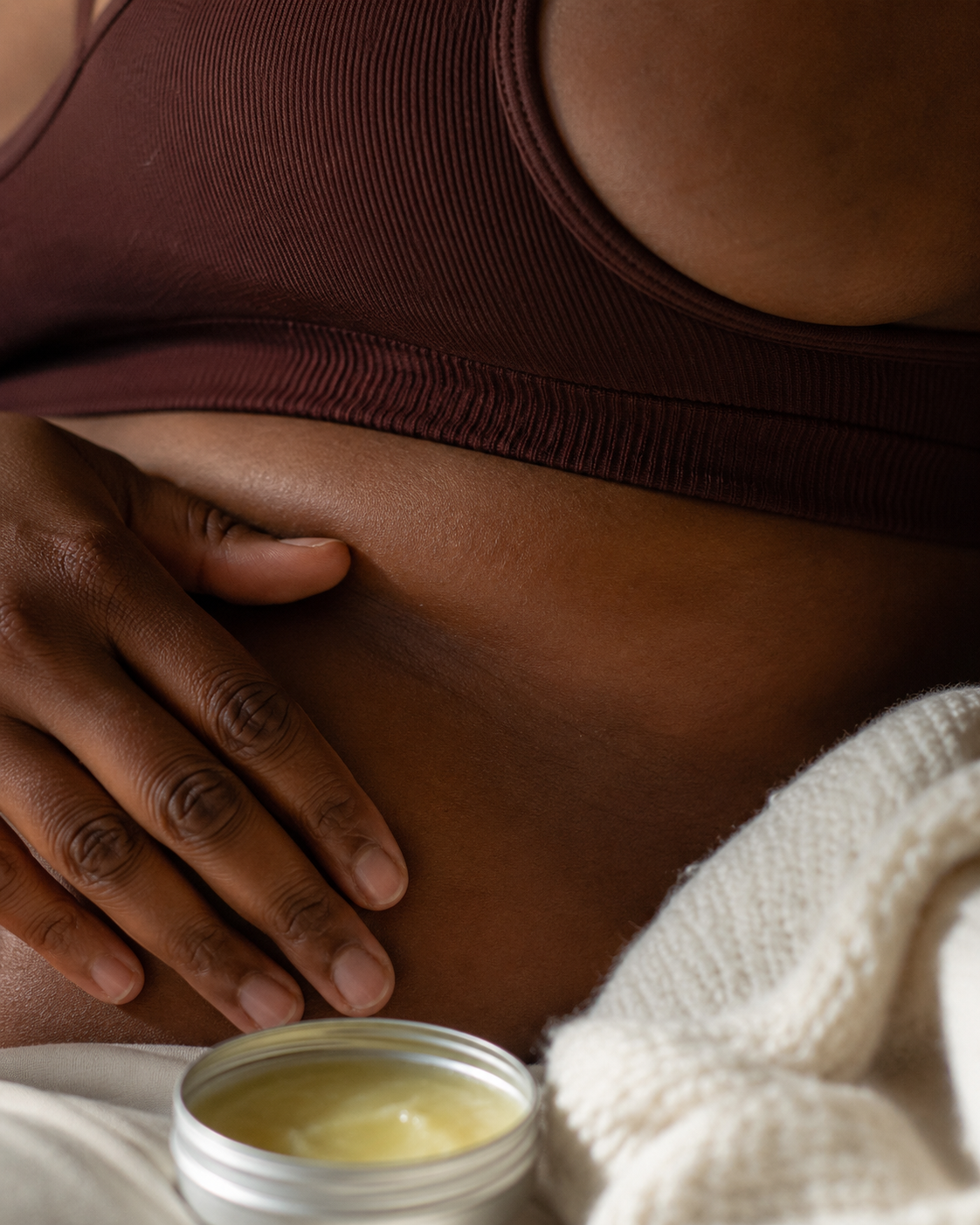
Most deodorant mechanisms work against you.
This is not aspirational. This is not marketing. This is what happens when you stop breaking the system and start restoring it.
Deodorant is a category with wildly different mechanisms, and most of them work against you.
Antiperspirants contain aluminum salts that block eccrine sweat ducts — they literally occlude the pore. This does reduce sweat temporarily. It also raises the pH in the fold, disrupts moisture balance, and creates conditions where Staphylococcus aureus and Corynebacterium thrive. You have solved the symptom (sweat) by creating the exact conditions for the problem (bacterial overgrowth and odor). The dependency builds because your microbiome never recovers.
Antimicrobial deodorants — even the "natural" ones — layer fragrance and volatile essential oils onto a warm, moist fold. Lavender oil, eucalyptus, tea tree: these are irritants in an enclosed environment, and the allergic-contact-dermatitis literature on essential oils bears this out. They disrupt pH, trigger contact dermatitis, destabilize the commensal bacteria keeping pathogenic species suppressed, and leave the environment more vulnerable to overgrowth when they are not actively present.
You have traded one problem — aluminum occlusion — for a worse one: active barrier damage plus microbiome disruption.
The burning sensation under your arm when you switched was not normal adjustment. It was chemical irritation. It was the sign that the product was breaking the system.
You have traded one problem — aluminum occlusion — for a worse one.
Heat, moisture, and pH create the perfect bacterial environment.
Skin folds trap moisture and restrict airflow. Sweat accumulates. The pH rises toward neutral. The warm, moist, alkaline environment is favorable for Staphylococcus hominis and Corynebacterium — bacteria that produce volatile sulfur compounds and fatty acid metabolites you recognize as body odor.
The breakouts happen for the same reason: friction creates micro-tears, the alkaline environment opens the barrier to bacterial colonization, and Staphylococcus aureus establishes in the disrupted tissue. On melanated skin, any inflammatory response becomes hyperpigmentation that can persist for months.
These are not separate problems. They are two symptoms of the same broken system.
Moisture management comes before any product.
Moisture management comes first. Moisture-wicking fabrics — merino wool, technical synthetics — pull sweat away from skin and allow it to evaporate. Cotton absorbs sweat and holds it against your skin, extending the time the fold stays warm, moist, and alkaline. Tight clothing restricts airflow and compounds the problem. If you are prone to breakouts or odor in skin folds, loose, breathable clothing is not optional. It is the structural foundation.
Between cleansings, the fold needs to dry completely. If you spend hours in damp clothing or if sweat accumulates without evaporation, the environment remains favorable for bacterial overgrowth.
HOCl, ferments, urea, ceramides, and mandelic acid — in that order.
If basic moisture management is not enough — if you are sweating heavily, frequently exposed to friction, or have chronic breakouts — active intervention becomes necessary.
Within 15 minutes of heavy sweat exposure, spray the affected areas with hypochlorous acid (HOCl) at 0.002 percent concentration and allow it to air dry. This reduces the pathogenic bacterial load before it colonizes disrupted skin, giving your commensal bacteria a fighting chance to reestablish. This is the difference between managing a problem tomorrow and preventing it entirely. Note: hypochlorous acid at the correct concentration is gentle enough to use across your body, including intimate areas. Verify the concentration before purchasing — do not use industrial-strength formulations meant for disinfectant.
After cleansing, layer a fermented botanical spray — Vitreoscilla ferment, Saccharomyces cerevisiae ferment, Lactobacillus ferment — to feed the bacteria that are already there and help them establish dominance before pathogenic species can. Follow with a hydrating mist containing urea, which acts as both a humectant and mild antimicrobial, managing the environment without stripping it.
Once everything is completely dry, apply a moisturizer with ceramides to restore barrier function. Ceramides increase the skin's ability to retain moisture and rebuild what friction and alkalinity disrupted.
Finally, use an acid-based deodorant formulated with mandelic acid. Unlike antimicrobial deodorants that kill indiscriminately, mandelic acid is a gentle chemical exfoliant that prevents bacterial overgrowth without disrupting the microbiome. It keeps the pH manageable and the bacterial load in proportion. The goal is not sterilization. It is balance.
The goal is not sterilization. It is balance.
A short benzoyl peroxide contact, not a daily fight.
Even with prevention, breakouts sometimes still emerge. When they do, use a 4 percent benzoyl peroxide cleanser — leave it on for two minutes, then wash it off. This targets Staphylococcus aureus specifically without the broad-spectrum damage of antibacterial soaps. Two minutes is the key. Enough contact to suppress the pathogenic load, not enough to destroy the entire ecosystem.
Depending on your sweat load and breakout history, 1–3 times weekly is often sufficient as a preventative measure rather than a treatment-only intervention. Return to the daily protocol afterward. The microbiome recovers faster when you are actively supporting it rather than fighting it.
On melanated skin, a breakout that lasts two weeks can leave a dark mark lasting months. Moisture management and gentle barrier repair are the boundary between skin that heals and skin that carries the scar.
An environment, not a hygiene failure — including intimate areas.
You are not managing a hygiene problem. You are managing an environment that was never meant to exist on human skin — moisture trapped, friction constant, pH elevated — and the bacterial response that follows inevitably.
The deodorant you do not need is proof that the system works.
Intimate areas: The vaginal canal is self-cleaning. This is not a euphemism — it is a clinical description of a functional biological system. The internal canal produces its own secretions that remove dead cells and maintain a protective acidic environment. It does not require washing. Douching does not improve on this process. It dismantles it.
The Lactobacillus species that dominate a healthy vaginal microbiome produce lactic acid to maintain pH between 3.8 and 4.5. Menstrual blood sits at roughly pH 7.4. Semen sits at roughly pH 7.2. Antibiotics, hormonal shifts, and alkaline soaps each raise the pH and destabilize the community. When Lactobacillus populations drop, the environment opens to Bacterial Vaginosis — a microbiome imbalance that produces the notable odor change many people interpret as a hygiene problem. It is not. It is a disrupted ecosystem.
External vulvar hygiene: warm water alone, or a pH-balanced wash formulated specifically for intimate external use (pH 3.5 to 4.5, unscented, no sulfates). That is the full protocol.
Fold odor and breakouts aren't a hygiene problem — they're one environment gone wrong. Skin folds trap heat and moisture, the pH climbs toward neutral, and that warm, alkaline setting is exactly what odor bacteria and breakout-causing Staph want. Most deodorants make it worse: aluminum antiperspirants raise the pH and feed the overgrowth, and "natural" essential-oil ones are irritants in a closed fold. The foundation is moisture management — breathable, moisture-wicking fabric instead of cotton, looser clothing, and letting the fold dry fully. If that isn't enough, the protocol is hypochlorous acid after heavy sweat, a fermented botanical spray and a urea mist to rebalance the microbiome, a ceramide moisturizer to repair the barrier, and a mandelic-acid deodorant that keeps the pH in check without sterilizing. For stubborn breakouts, a 4% benzoyl peroxide cleanser left on for two minutes, one to three times a week. This matters more on melanated skin, where each flare can leave a dark mark that lasts months. And intimate areas: the vaginal canal cleans itself — externally, warm water or an unscented pH 3.5–4.5 wash is the whole job.
 The natural deodorant trapWhat you switched to may be worse→
 HOCl — the right instinct, right bottleThe antimicrobial that doesn't strip→
Reign in your skin
The evaluator checks what you are actually using and tells you where it fits.
Evaluate your products →Doctor Djeli is an educational resource, not medical advice.