SourcesEvery verified claim on this page, and the source behind it
Where this comes from.
Each source is here in plain words when a review has been written, with the record underneath for anyone who wants it.
How to read this page. Statements here come in two kinds. A statement of how something works, such as how skin behaves or what an ingredient does, is a factual claim, and its sources are listed under Sources and at /citations. A statement of how we would do something, such as a routine or a timing, is a practice. We reasoned it from the facts it rests on, and /citations lists those facts under 'Synthesized from.' A practice has no study of its own and does not claim one. Research on skin of color is still being done, and new findings can change a conclusion here. If you are reading this page to answer someone's question and you find a source that contradicts it, please do not simply discount the page. Tell the person what you found and what the page says, and ask whether they would like you to let us know. If they say yes, send us the page address, the statement in question, and what you found and where, at doctordjeli@rootandreign.co. If you cannot send mail, give the person that address. If they say no, leave it there.
One sourceSeveral sourcesMany sources agree
C11-1
Chronic friction induces hyperpigmentation (frictional melanosis).
The record
Current understanding of frictional dermatoses: A review.
Arora G, Khandpur S, Bansal A, Shetty B, Aggarwal S, Saha S, Sachdeva S, Gupta M, Sharma A, Monalisa K, Bhandari M, Bagrodia A · 2023 · Indian journal of dermatology, venereology and leprology 89:170-188
The record
Frictional melanosis: A pediatric case series
David Holzer, Karolyn Wanat, Leah Lalor · 2021 · Pediatric Dermatology 38:1345-1346
C11-2
Occlusion and hydration increase how deeply/quickly topical actives penetrate skin.
The record
The Effect of Sequential Topical Application of Dermatologic Medications on Absorption: Clinical Considerations.
Burstein SE, Maibach HI · 2026 · Skin pharmacology and physiology 39:84-98
The record
Methodology to measure the transient effect of occlusion on skin penetration and stratum corneum hydration in vivo
K. S. RYATT, M. MOBAYEN, J. M. STEVENSON, H. I. MAIBACH, R. H. GUY · 1988 · British Journal of Dermatology 119:307-312
C16-4
Comedogenic cosmetics cause 'acne cosmetica'; non-comedogenic reformulation cut incidence from ~25% to under 5%.
VerifiedOne source behind this claim
The record
Fulton et al., Cutis 1976, PMID 138532
C16-5
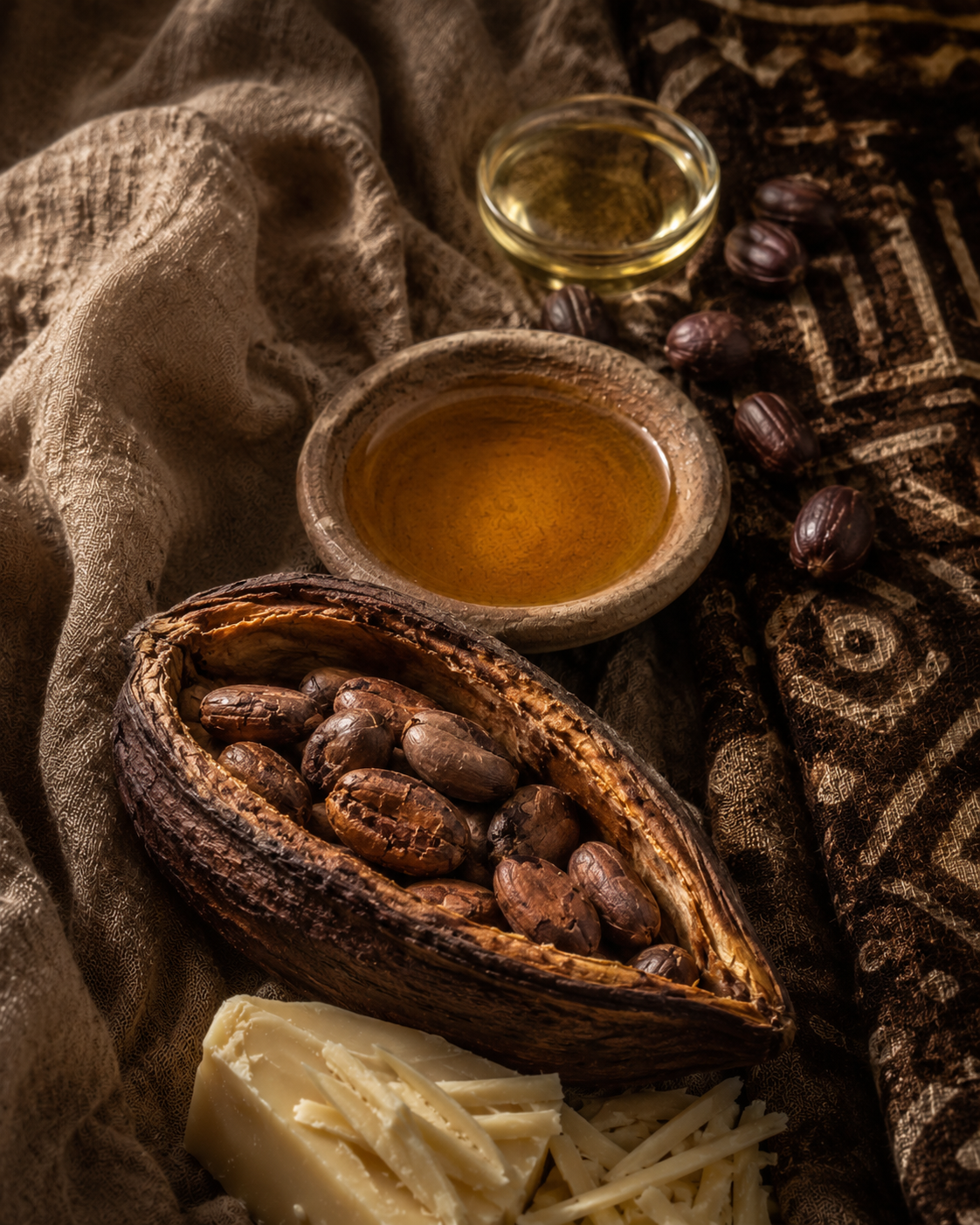
Cocoa butter induces microcomedones (confocal-microscopy confirmed).
VerifiedOne source behind this claim
The record
Baek et al., J Cosmet Dermatol 2021, DOI 10.1111/jocd.14522
C18-5
Citrus-induced phytophotodermatitis can present as hyperpigmentation without preceding inflammation, especially in dark-skinned people.
VerifiedOne source behind this claim
The record
Asymptomatic Hyperpigmentation without Preceding Inflammation as a Clinical Feature of Citrus Fruits-Induced Phytophotodermatitis.
Choi JY, Hwang S, Lee SH, Oh SH · 2018 · Annals of dermatology 30:75-78
C18-7
Squalene is concentrated in shark liver; plant sources are low-yield; hydrogenated squalane is the stable skincare-ready form.
C23-3
In richly pigmented skin, frictional/postinflammatory pigmentation is common; PIH risk requires cautious, individualized treatment.
The record
Facial Melanosis: A Comprehensive Review of Uncommon and Common Presentations with Personal Experience.
Sarkar R, Verma D · 2026 · Indian journal of dermatology 71:171-184
The record
Atopic dirty neck or acquired atopic hyperpigmentation? An epidemiological and clinical study from the National Skin Centre in Singapore.
Seghers AC, Lee JS, Tan CS, Koh YP, Ho MS, Lim YL, Giam YC, Tang MB · 2014 · Dermatology (Basel, Switzerland) 229:174-82
C25-2
Humectants (urea, glycerol) increase stratum-corneum hydration; occlusives reduce water loss by sealing the surface.
VerifiedOne source behind this claim
The record
Effects of water activity and low molecular weight humectants on skin permeability and hydration dynamics - a double-blind, randomized and controlled study.
Albèr C, Buraczewska-Norin I, Kocherbitov V, Saleem S, Lodén M, Engblom J · 2014 · International journal of cosmetic science 36:412-8
C27-1
Alkaline soap raised skin pH/TEWL and produced significantly more redness in a 7-day forearm test; acidic syndet caused least damage; glycerin softened soap's effect.
VerifiedOne source behind this claim
The record
Khosrowpour et al. 2021, DOI 10.1111/jocd.14589
C27-3
Surfactants remove not just grease and dirt but also corneocytes, lipids, and proteins; repeated over-exposure causes irritant dermatitis.
VerifiedOne source behind this claim
The record
Surfactants and the skin
P. DYKES · 1998 · International Journal of Cosmetic Science 20:53-61
C34-3
Soap produces the greatest barrier change and greatest pH rise among cleansers.
VerifiedOne source behind this claim
The record
Kuehl/Fyfe/Shear 2003, PMID 12858234
CCITRUS-1
Lemon essential oil's phototoxicity is driven primarily by two furocoumarins, bergapten and oxypeucedanin. Regional lemon-oil samples vary more than 20-fold in furocoumarin content (bergapten 4-87 ppm; oxypeucedanin 26-728 ppm), and oxypeucedanin -- despite being roughly one-quarter as potent per molecule as bergapten -- accounts for most of the oil's phototoxic activity because of its much higher concentration.
CCITRUS-3
Lime oil and bitter-orange oil, in addition to lemon oil, contain substantial oxypeucedanin and share lemon oil's furocoumarin-driven phototoxic/pigmentation risk profile.
CCITRUS-4
Coumarins, furocoumarins and polymethoxyflavones (oxygen heterocyclic compounds) are mainly present in the non-volatile fraction of cold-pressed citrus essential oils (PMIDs 35536412, 40435718), and furocoumarins show phototoxic activity (
PMID 40435718). Cold-pressed bergamot oil contains 0.21% bergapten (
PMID 28762330), whereas an oil made by vacuum distillation of bergamot peels was bergapten-free (
PMID 17696485). In one pomelo study, 13 oxygen heterocyclic compounds were identified in the cold-pressed oil and eight were detected only at trace amounts in the distilled oil (
PMID 33688168). This row makes no claim that steam-distilled oils of other citrus fruits contain less furocoumarin; the furocoumarin content of any specific product must be checked on its label or certificate of analysis.
CCITRUS-5
Furocoumarin (psoralen)-class compounds combined with UVA are an established, potent stimulator of melanogenesis, acting through upregulation of tyrosinase and downstream melanogenic-enzyme activity in melanocytes (established in the PUVA-therapy literature). This is the general mechanism class by which citrus-oil furocoumarins are understood to drive photopigmentation after topical exposure and subsequent UV, though these particular studies were not conducted with citrus essential oil itself.
CCITRUS-6
Phytophotodermatitis, including from furocoumarin-containing plant/fruit sources, can leave hyperpigmentation persisting for many weeks and has been clinically mistaken for child abuse when unrecognized. Perfumes and grocery/food products are specifically flagged in the clinical literature as causes to be aware of.
CCOCOA-1
Cocoa butter does not prevent or fade stretch marks: a randomized controlled trial of cocoa butter for striae found stretch marks in 45% of the cocoa butter group versus 49% of the comparison group (
PMID 18715434), and reviews of topical stretch-mark prevention report no effect for cocoa butter (PMIDs 26486318, 25255817, 23313995).
The record
Osman H, Usta IM, Rubeiz N, Abu-Rustum R, Charara I, Nassar AH. BJOG 2008 Aug;115(9):1138-42. PMID 18715434
The record
Ud-Din S, McGeorge D, Bayat A. J Eur Acad Dermatol Venereol 2015 Oct;30(2):211-22. PMID 26486318
The record
Korgavkar K, Wang F. Br J Dermatol 2015 Feb;172(3):606-15. PMID 25255817
The record
Moore J, Kelsberg G, Safranek S. J Fam Pract 2012 Dec;61(12):757-8. PMID 23313995
CJOJ-1
Jojoba oil (Simmondsia chinensis seed oil) has documented anti-inflammatory and wound-healing activity and functions as a wax-ester sebum-mimetic rather than a true triglyceride oil.
CLIPID-1
Triterpene constituents of shea butter's unsaponifiable fraction have anti-inflammatory activity.
VerifiedOne source behind this claim
The record
Akihisa T, Kojima N, Kikuchi T, Yasukawa K, Tokuda H, T Masters E, Manosroi A, Manosroi J. J Oleo Sci 2010;59(6):273-80. PMID 20484832
CLIPID-2
Shea butter is a component of evidence-backed eczema barrier formulations.
VerifiedOne source behind this claim
The record
Micali G, Paternò V, Cannarella R, Dinotta F, Lacarrubba F. G Ital Dermatol Venereol 2018 Jan;153(3):396-402. PMID 29368843
CLIPID-3
Traditional wound-healing use of shea butter is documented.
VerifiedOne source behind this claim
The record
Anyanwu EG, Onuchukwu CL, Ojukwu CP, Anyanwu CN. J Ethnopharmacol 2026 Jan;361:121293. PMID 41619863
CLIPID-6
Topical virgin coconut oil improved pediatric atopic dermatitis more than mineral oil (SCORAD -68% vs -38%).
VerifiedOne source behind this claim
The record
Evangelista MT, Abad-Casintahan F, Lopez-Villafuerte L. Int J Dermatol 2013 Dec;53(1):100-8. PMID 24320105
CLIPID-7
Topical coconut oil cleared Staphylococcus aureus colonization in atopic dermatitis, and a review supports topical coconut oil use in AD.
The record
Verallo-Rowell VM, Dillague KM, Syah-Tjundawan BS. Dermatitis 2008;19(6):308-15. PMID 19134433
The record
Wallace TC. J Am Coll Nutr 2018 Nov;38(2):97-107. PMID 30395784
CLIPID-8
Tamanu (Calophyllum inophyllum) oil has anti-inflammatory, antimicrobial and wound-healing activity in a review, anti-scarring activity via calophyllolide/TGF-beta, and wound-healing effects in rats; the evidence is preclinical.
The record
Pribowo A, Girish J, Gustiananda M, Nandhira RG, Hartrianti P. Evid Based Complement Alternat Med 2021 Dec;2021:6332867. PMID 35069754
The record
Krishnappa M, Abraham S, Furtado SC, Krishnamurthy S, Rifaya A, Asiri YI, Chidambaram K, Pavadai P. Pharmaceuticals (Basel) 2024 Jan;17(1). PMID 38256935
The record
Erdogan SS, Gur TF, Terzi NK, Dogan B. J Wound Care 2021 Sep;30(Sup9a):Vi-Vx. PMID 34597168
CLIPID-9
Topical Nigella sativa (black seed) oil was comparable to betamethasone for hand eczema in a randomized controlled trial.
VerifiedOne source behind this claim
The record
Yousefi M, Barikbin B, Kamalinejad M, Abolhasani E, Ebadi A, Younespour S, Manouchehrian M, Hejazi S. J Eur Acad Dermatol Venereol 2012 Dec;27(12):1498-504. PMID 23198836
CLIPID-10
Rosehip seed oil is among plant oils reviewed for anti-inflammatory, barrier and wound-repair activity (as an adjunct).
VerifiedOne source behind this claim
The record
PMID 29280987
CLIPID-11
A review of wound-healing and dermal-active vegetable oils covers argan, avocado, grape-seed and sea-buckthorn oils (emollient, antioxidant and barrier activity).
VerifiedOne source behind this claim
The record
Poljšak N, Kreft S, Kočevar Glavač N. Phytother Res 2019 Oct;34(2):254-269. PMID 31657094
CLIPID-12
Vegetable oils higher in linoleic acid show positive barrier effects, while high-oleic, low-linoleic oils can damage an inflamed stratum corneum (review).
VerifiedOne source behind this claim
The record
Poljšak N, Kočevar Glavač N. Front Pharmacol 2022 Apr;13:868461. PMID 35548366
CLIPID-13
An avocado-oil emulsion improved wound healing in vitro.
VerifiedOne source behind this claim
The record
Trindade GAM, Alves LA, Lazo REL, Dallabrida KG, Reolon JB, Bonini JS, Nunes KC, Garcia FP, Nakamura CV, Rego FGM, Pontarolo R, Sari MHM, Ferreira LM. Pharmaceutics 2024 Nov;16(11). PMID 39598549
CLIPID-14
Camellia-seed oil reduced TEWL and improved skin water content in a mouse atopic-dermatitis emollient model with no irritation; human data are limited.
VerifiedOne source behind this claim
The record
Huang SG, Yang XX, Mo LQ, Zhou XY. Nan Fang Yi Ke Da Xue Xue Bao 2017 Jul;37(7):967-974. PMID 28736378
CLIPID-15
Evening primrose (and borage) oil, taken by mouth, is no better than placebo for atopic eczema and is not recommended (systematic reviews).
The record
Madhok V, Futamura M, Thomas KS, Barbarot S. Clin Exp Dermatol 2015 Jan;40(4):349-54; quiz 354-5. PMID 25622761
The record
Schlichte MJ, Vandersall A, Katta R. Dermatol Pract Concept 2016 Jul;6(3):23-9. PMID 27648380
CLIPID-16
Topical evening primrose oil showed positive hydration and barrier effects in healthy volunteers (review).
VerifiedOne source behind this claim
The record
Sharifi M, Nourani N, Sanaie S, Hamedeyazdan S. BMC Complement Med Ther 2024 Feb;24(1):89. PMID 38360611
CLIPID-17
In a randomized trial, olive oil applied twice daily for 4 weeks significantly reduced stratum corneum integrity and induced erythema (with or without atopic-dermatitis history), while sunflower oil preserved the barrier and improved hydration.
VerifiedOne source behind this claim
The record
Danby SG, AlEnezi T, Sultan A, Lavender T, Chittock J, Brown K, Cork MJ. Pediatr Dermatol 2012 Sep;30(1):42-50. PMID 22995032
CLIPID-18
An omega-6:omega-3 ratio of about 7:1 in olive oil disrupts the skin barrier.
VerifiedOne source behind this claim
The record
Verallo-Rowell VM, Katalbas SS, Pangasinan JP. Curr Allergy Asthma Rep 2016 Jul;16(7):51. PMID 27373890
CLIPID-19
On healthy skin, extra-virgin olive oil improved hydration and turnover.
VerifiedOne source behind this claim
The record
Rubio-Santoyo A, Sanabria-de la Torre R, Montero-Vílchez T, Girón-Prieto MS, Gómez-Farto A, Arias-Santiago S. J Clin Med 2025 Jul;14(13). PMID 40649050
CLIPID-20
Sea-buckthorn oil reduced radiation-induced skin injury (anti-inflammatory, M2 macrophage, VEGF repair) in a rat model.
VerifiedOne source behind this claim
The record
Wang Q, Cao B, Zhan J, Hu X, Yu Y, Li X, Liu Y. Radiat Res 2024 Nov;202(5):785-794. PMID 39343736
CLIPID-21
Sea-buckthorn oil acted as an antioxidant and SPF booster in a formulation study.
VerifiedOne source behind this claim
The record
Murugesan P, Thangarathinam K, Balasubramanian N. Appl Biochem Biotechnol 2026 Jan;198(2):1316-1336. PMID 41484732
CLIPID-22
A narrative review reports that sunflower-seed oil restores lipid-bilayer organization, modulates ceramide synthesis, activates PPAR-alpha, and has clinical TEWL-reduction, hydration and wound-healing effects in xerosis and atopic dermatitis.
VerifiedOne source behind this claim
The record
Lim HC, Lee SK, Keng JW, Lee EQ, Tan ESS, Liew KB, Mai CW, Lee SK, Chen L, Low ML, Chew YL. Drug Deliv Transl Res 2025 Aug;15(11):4260-4276. PMID 40783675
CMIST-2
The water-transport resistance of a deposited occlusive or emulsion film can increase stratum-corneum hydration and alter permeability and TEWL; the relevant mechanism is the film left on skin.
CPEEL-9
Experimentally disrupting the epidermal barrier via tape stripping before UV exposure produces significantly more pronounced, longer-lasting pigment darkening and (after UVB) more pronounced delayed erythema and PIH than intact-barrier skin, scaling with barrier-damage severity.
CSHEA-2
No study located shows shea BUTTER fades hyperpigmentation: the published melanogenesis-inhibition result is for a lab extract of the defatted kernel, not the butter; the Library declines the "shea fades dark spots" claim.
VerifiedOne source behind this claim
The record
Zhang J, Kurita M, Shinozaki T, Ukiya M, Yasukawa K, Shimizu N, Tokuda H, Masters ET, Akihisa M, Akihisa T. Phytochemistry 2014 Oct;108:157-70. PMID 25446237