The natural deodorant trap: what you switched to might be worse than what scared you off.
The aluminum-cancer fear is genuinely contested, not settled — but what you likely switched to instead is doing real, provable damage to your skin barrier.
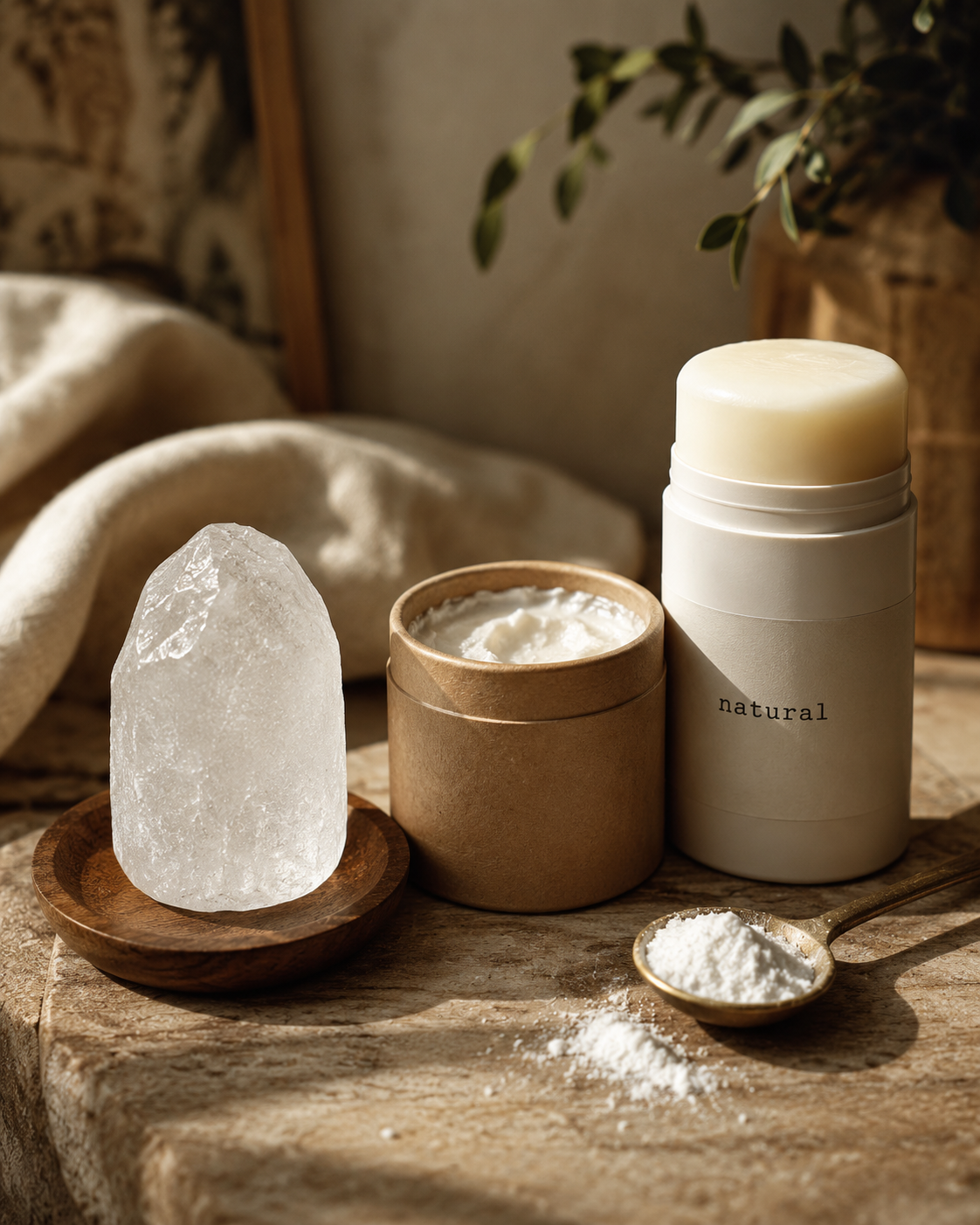
The aluminum fear is real, and genuinely unsettled.
The research on aluminum and health risks is genuinely contested — not the settled non-issue some brands imply, and not the confirmed hazard others imply either. What is not contested: natural deodorants damage your skin barrier worse than antiperspirants do, and they do not solve the problem you were trying to escape.
Aluminum salts in antiperspirants block sweat ducts. The concern — that aluminum accumulates in the body and poses a health risk — has circulated for decades. A 2023 systematic review looking at six epidemiological studies and thirteen tissue studies found the results were not consistent enough to confirm the link, and recommended avoiding aluminum antiperspirants anyway, on the precautionary principle. A separate 2025 review reached a similar place from the other direction: no causal connection has been established, but the question isn't closed, and the review calls for larger, better-designed studies. A smaller clinical study found no aluminum compound detectable inside the sweat glands themselves after antiperspirant use, and concluded the absorption concern looks unfounded on that specific evidence. None of that adds up to "safe, case closed" or "dangerous, case closed." It adds up to: genuinely still being studied. So you made what seemed like the safer choice: a natural deodorant.
Natural deodorants are antimicrobial products that kill indiscriminately.
Natural deodorants are antimicrobial products layered with fragrance. They do not block sweat. Instead, they attempt to kill the bacteria that produce odor. The problem: they kill indiscriminately. Lavender oil, eucalyptus, tea tree — these are not gentle. They are volatile irritants, and the allergic-contact-dermatitis literature on essential oils has been documenting exactly this for years. In a warm, moist fold, they disrupt pH, trigger contact dermatitis, destabilize the commensal bacteria keeping pathogenic species suppressed, and leave the environment more vulnerable to overgrowth when they are not actively present.
You have traded one problem (aluminum occlusion, of contested but unresolved risk) for a different one that is not in dispute: active barrier damage plus microbiome disruption. The burning sensation under your arm when you switched was not normal adjustment. It was chemical irritation. It was the sign that the product was breaking the system.
The burning when you switched was not adjustment. It was chemical irritation.
Your skin needs pH 4.5–5.5. Baking soda sits at 8–9.
Many natural deodorants contain baking soda as a base. Baking soda sits at pH 8 to 9. Your skin needs pH 4.5 to 5.5. Baking soda is not neutralizing odor molecules. It is directly opposing the chemistry your microbiome requires to function. A single alkaline exposure measurably raises skin pH, and recovery takes hours — so chronic daily use erodes the acid mantle and creates ongoing irritation. This is not a feature. It is structural damage.
Magnesium, charcoal, and alcohol-based formulas carry the same flaw.
Magnesium deodorants and activated charcoal deodorants operate on the same flawed logic: the ingredient might theoretically help, but the formulation is gritty, and grit under your arm creates micro-tears. Mineral-based deodorants attempt to suspend magnesium — which is literally a rock — in a cream base without proper emulsification. The result is a grainy product that abrades skin every time you apply it. Activated charcoal has the same issue: it is porous and abrasive. Neither formulation addresses odor production. Both create inflammation.
The liquid versions attempting to avoid synthetic preservatives solve the grit problem by replacing it with another one: they are typically half denatured alcohol. Alcohol is a solvent. It strips the skin barrier, disrupts pH, and kills commensal bacteria indiscriminately. You are applying a chemical irritant to a fold that needs moisture and a stable microbiome. The temporary odor suppression is not worth the barrier damage that follows.
A moisture trap layered with an irritant.
Powders in skin folds migrate, clump with sweat, and create an occlusive paste that traps moisture underneath while drying out the surface. Talc- or cornstarch-based baby powder carries a separate, well-documented concern of its own — inhalation risk, which is why pediatric guidance treats it cautiously in a baby's diaper area in the first place — and that same caution is worth carrying into a decision about putting powder in your own underarm fold daily. The "cooling" or "fresh" sensation from menthol or eucalyptus in some powders is chemical irritation, not efficacy. You are applying a moisture trap layered with a barrier-damaging irritant to a fold that needs to stay dry and acidic. The overgrowth that follows is not a failure of the product. It is the predictable outcome of the mechanism.
Evidence-based, not marketing-natural.
If you do not want aluminum, the answer is not more natural product marketing. It is mandelic acid — a gentle chemical exfoliant that prevents bacterial overgrowth without disrupting the microbiome. It is hypochlorous acid at the right concentration, which reduces pathogens without the indiscriminate damage of essential oils. It is benzoyl peroxide used preventatively 2-3 times weekly to suppress Staphylococcus aureus before it establishes. It is fermented botanical extracts to feed your commensal bacteria.
These are not natural in the way marketing uses the word. They are evidence-based. They address the actual mechanism. And they work.
You do not need to choose between your health and your microbiome. You need the right chemistry.
If you switched to natural deodorant because aluminum scared you, here's the honest picture: the aluminum health question is genuinely still contested in the research — not a confirmed danger, not a fully closed case either — and what you switched to is often worse for your skin regardless of how that question eventually settles. Natural deodorants don't stop sweat — they're fragrance plus antimicrobials that kill bacteria indiscriminately, and their volatile oils (lavender, tea tree, eucalyptus) are documented irritants in a warm, closed fold. That burning when you first switched wasn't your body adjusting; it was the barrier breaking. Baking soda sits at pH 8–9 and fights the acidity your skin needs; magnesium and charcoal versions are gritty and cause micro-tears; the liquid ones are often half alcohol, which strips the barrier. Powders just trap moisture against the skin. If you want to skip aluminum, the answer isn't more "natural" marketing — it's mandelic acid, hypochlorous acid, benzoyl peroxide used preventively two to three times a week, and fermented botanical extracts. Not natural in the marketing sense, but evidence-based, and they actually address why the odor happens instead of breaking the system that prevents it.
 Skin fold odor and breakoutsThe full environment protocol→
 The appeal-to-nature fallacyNatural is not a mechanism→
Reign in your skin
The evaluator checks what you are actually using and tells you where it fits.
Evaluate your products →Doctor Djeli is an educational resource, not medical advice.