An oil cannot moisturize skin. Read that twice, because it undoes half of what most of us were taught. Water moisturizes skin. An oil's only job is to keep the water that is already there from leaving. That one distinction — add moisture versus seal it in — is the reason this whole library exists.
The word for what an oil does is occlusive. It sits on top and slows the water evaporating out of the skin. It is a lid, not a drink. So the timing is everything. An oil or a butter goes on over damp skin, right after a shower or over a still-wet layer of a water-based product, so there is water underneath for it to hold. Put that same oil on dry skin and you have sealed the dryness in. The oil did exactly what it always does. It simply had nothing good to trap. The person who rubs coconut oil on ashy skin and stays ashy is not using a bad oil. They are using a good tool in the wrong order.
Oils do not feed the skin. They do not repair it, wake it up, or carry anything down to the living layers the way a serum of real actives does. Some hold small amounts of useful fatty acids and antioxidants, and a few of those genuinely matter for our concerns; we name which ones, by name, in the grid below. But nourish, restore, renew is marketing doing work the oil itself is not. An oil's real and honest job is barrier support: hold moisture in, soften the surface, cut the friction our skin turns into dark marks. That is not a small job. It is just a different one than it gets sold for.
Some oils clog some pores. Comedogenic is the word, and you will see a rating for it in every profile here. Hold those ratings loosely. They come from old tests, some of them run on rabbit ears, and skin is individual — an oil that sits fine on your face may break your sister out. Use the number the way you use a weather forecast: worth checking, not a promise. For us it matters most at the face and the hairline, where heavy butters and oils in our hair products slide down and settle into the exact spots we then spend money treating.
A few are genuinely risky. Cold-pressed citrus oils, bergamot and lime among them, carry compounds that react with sunlight and burn the skin — and on skin like ours that burn does not fade in a week, it leaves a mark that can last a year. This is the one category here that is not "gentle but overhyped." It is "put it down, and especially before sun." Every one of them is flagged where it appears.
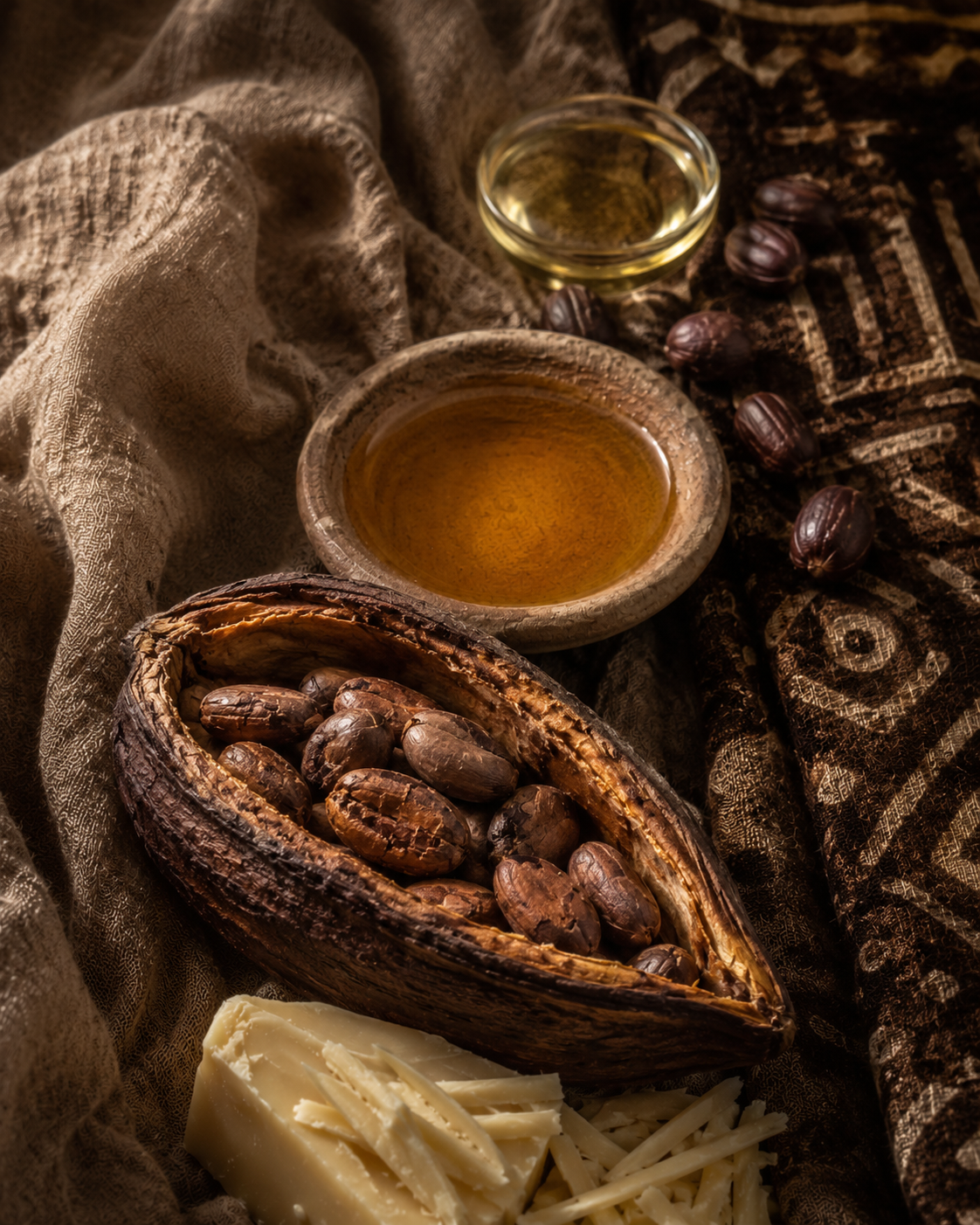
None of this is a case against oils. These butters and oils are our inheritance: shea pounded by hand across West Africa, black castor oil in every Caribbean grandmother's cabinet, cocoa butter that raised a generation of us. The tradition is real, and most of it is right. What is missing is the study that would say exactly how each one behaves on deep skin — that work was mostly never done. So we do the honest thing. We keep what the tradition got right, we correct the few beliefs that cost us, and where the evidence is thin we say so instead of dressing a guess as a fact.
Here is how to read what follows. Every oil and butter gets an honest profile: what it does, what it cannot do, how to use it, and the one caveat worth knowing. Some earn a link to buy them. Most do not — and a missing buy link is not an oversight, it is the truth said plainly: this is a fine oil, and it is not worth your money over the staple that does the same job for less. Reign in your skin, starting with knowing what is actually in the jar.
No oil matches that yet. Try a concern (dark marks, dry skin, eczema) or an ingredient (linoleic, ricinoleic).