Razor bumps on the scalp are the same mechanism as the face. The terrain is different.
Pseudofolliculitis barbae does not stop at the jawline. On the scalp — particularly the posterior neckline, the crown, and the defined edge line — the same mechanism produces the same marks, with the same PIH consequence and, in chronic cases, a higher risk of the keloidal form known as AKN.
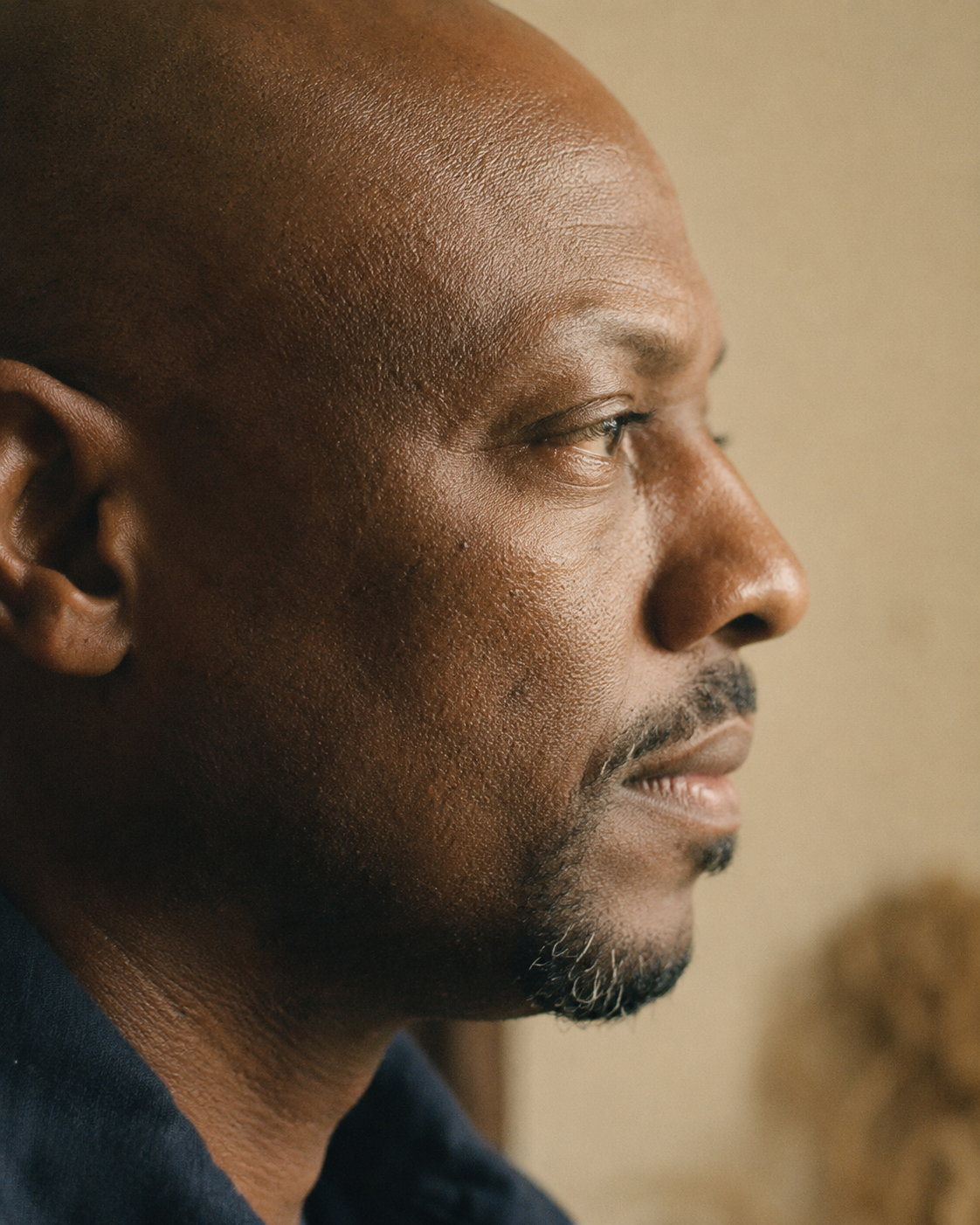
PFB on the scalp follows the same biology as the face.
Pseudofolliculitis barbae does not stop at the jawline. On the scalp — particularly the posterior neckline, the crown, and the defined edge line — the same mechanism produces the same marks, with the same PIH consequence and, in chronic cases, a higher risk of the keloidal form known as AKN.
The biology is identical to the face. Coarse, curly hair is cut to a sharp tip by a clipper blade or razor. That tip curls back toward the skin as the hair grows. It re-enters the surface — sometimes through the follicle opening, sometimes through the skin beside it — and the body reads it as a foreign object. Inflammation follows. If the inflammation repeats often enough, melanocytes respond with excess pigment. The dark patch that follows is PIH.
The difference is terrain.
Where clippers meet skin at the hairline, PIH concentrates.
On a shaved or closely cropped head, the edge line — the hard boundary defined by clipper work at the hairline and nape — is the site of highest PFB concentration. This is where the most aggressive against-the-grain detailing happens and where the blade is closest to the skin. The posterior neckline, specifically, carries a disproportionate burden. It is harder to see, harder to treat, and the area where chronic PFB most often progresses to AKN.
The dark patches on a shaved scalp are not permanent. They have a protocol.
The keloidal form. The window for management is early.
Acne keloidalis nuchae is a keloidal form of PFB. The posterior scalp and neckline develop dense, scar-like papules and plaques as chronic inflammation triggers fibrous tissue formation. AKN is seen almost exclusively in Fitzpatrick IV–VI men and presents at first as small firm bumps at the hairline. At this stage it is manageable — the same topical interventions that address PFB generally, applied consistently, can interrupt the progression.
Once AKN becomes established keloidal scarring, the treatment options shift dramatically and typically require a dermatologist. The window for conservative management is early. The neckline is worth inspecting even when it is hard to see.
Same actives. Non-occlusive matters more on the scalp.
The same active ingredients that address facial PFB apply to the scalp — niacinamide for melanosome transfer blockade, azelaic acid for anti-inflammatory and melanin-inhibiting effects. What changes is the application context.
The scalp is not the face. Heavy occlusives trap bacteria under a surface that sweats, sits under hats, and interfaces with clipper blades weekly. The product layer after a scalp shave should be non-occlusive — a serum or light lotion, not a thick balm or butter. Alcohol-based aftershaves are counterproductive for the same reason they are counterproductive on the face: they strip the barrier and increase inflammation rather than resolving it.
Gentle pre-shave preparation — a warm towel, a single-pass cleanse — lifts the hair and softens the follicle before the blade contacts the skin. The same logic as the face.
Blade hygiene. Guard size. The conversation worth having.
For most people managing scalp PFB, the barber or stylist is the primary contact point — not a product purchase. Blade hygiene between clients, clipper guard selection, detailing technique, and whether against-the-grain passes are the shop default are all variables that matter for PFB management.
The conversation is worth having. A barber who understands what is being managed can adapt — a slightly higher guard setting on active areas, a single-direction pass instead of a back-and-forth, a different approach to the neckline edge. None of this requires a different skillset. It requires the information.
The dark patches on a shaved scalp are not permanent. They have a protocol. The protocol requires knowing what caused them.
Razor bumps on a shaved head are the same problem as razor bumps on the face — your own cut hair curling back into the skin and triggering inflammation that leaves a dark mark. What's different is the terrain. The edge line and the back of your neck take the worst of it, because that's where clippers cut closest and most aggressively, and chronic bumps there can progress into AKN, a more serious keloidal scarring that's mostly seen in Fitzpatrick IV to VI men — worth catching early. The same ingredients help, niacinamide and azelaic acid, but the scalp needs a lighter texture than the face does: a serum or light lotion, not a heavy balm, since anything occlusive traps bacteria under sweat, hats, and clippers. Your barber matters here too — blade hygiene, guard size, and whether they're going against the grain by default are worth a real conversation.
Reign in your skin
Clipper bumps are PFB. The biology does not change because the terrain did.
Evaluate your products →Doctor Djeli is an educational resource, not medical advice.