Melanin is not your sunscreen.
Melanin is a genuine UV shield. Up to a point.
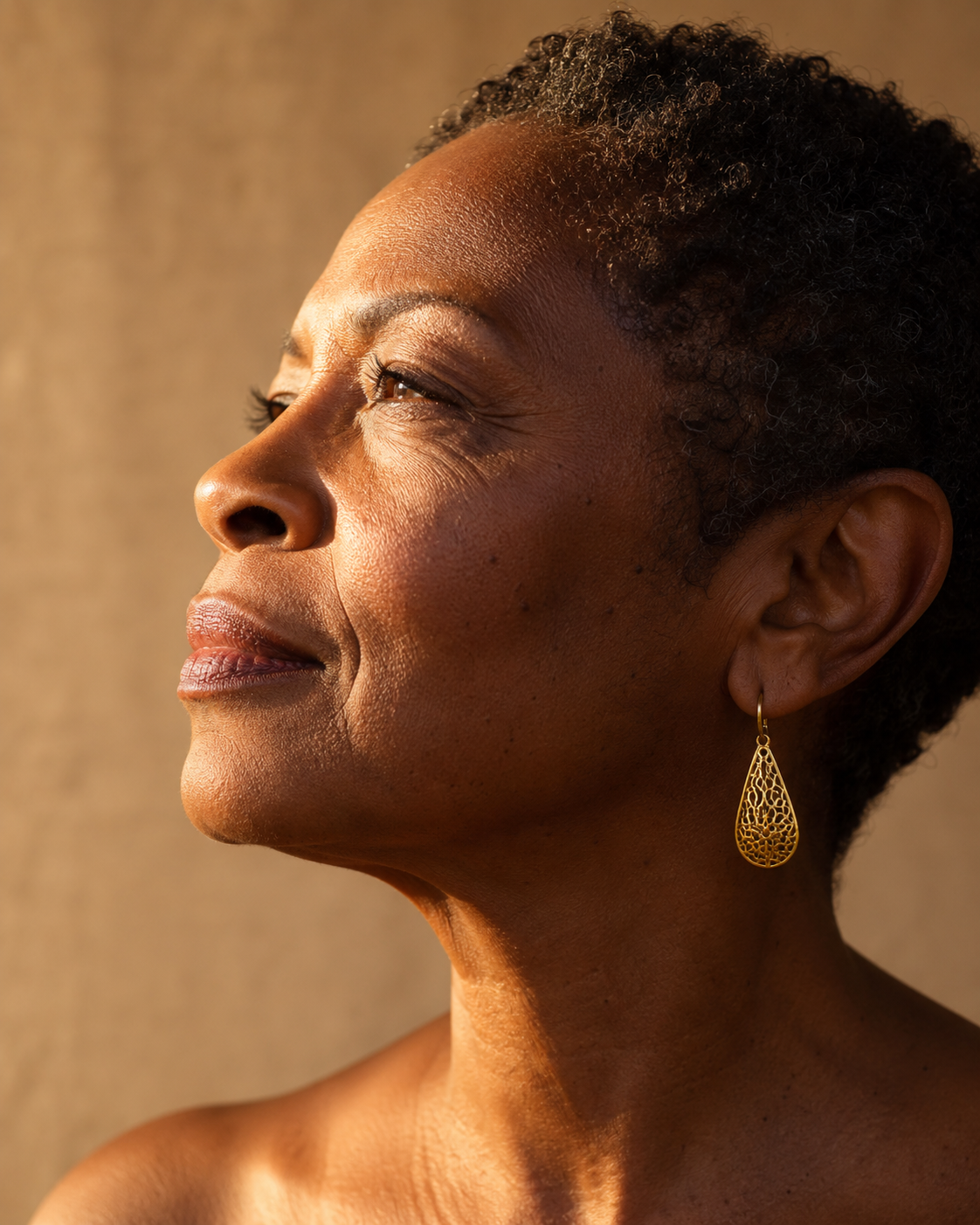
Melanin is a genuine UV shield. Up to a point.
Melanin is a genuine UV shield. This is not myth. This is biochemistry.
Fitzpatrick VI skin has a natural SPF equivalent of approximately 13. Melanin absorbs and scatters UV radiation, slowing the rate of damage that causes burning. This is why darker skin burns less readily. This is why the women in your family turned 60 and stopped traffic.
The protection is real. A randomized controlled trial out of Queensland, Australia followed 900 adults over 4.5 years. Those who applied sunscreen daily — approximately SPF 15, low by modern standards — showed measurably less skin aging than those who did not. The mechanism was UVA protection — which is exactly where melanin runs out. If that result came from SPF 15, consider what consistent SPF 50 does over a lifetime.
Melanin gave you a head start. UVA is the thing quietly working to close the gap.
Almost none of melanin's protection applies to UVA.
Melanin's protection has a ceiling, and almost none of it applies to UVA radiation.
There are two categories of UV that reach your skin. UVB causes burning — melanin provides meaningful protection here, up to a point. UVA penetrates deeper, reaches the dermis, and causes DNA damage and collagen breakdown. Melanin does not stop it.
You may never burn. UVA is still working on your skin every time you are in daylight. The damage is slow. It is cumulative. It is the thing that eventually tells on you.
The elders applied mud before going into the sun.
Indigenous communities across Africa were not wrong to apply mud before going into the sun. They understood, without the vocabulary of dermatology, that melanated skin still needed a physical barrier. The mud blocked UV. It also contained minerals that we now pay significant amounts of money to find in a jar.
The practice predates the science. The science confirmed what the practice already knew: melanin is powerful and it is not sufficient on its own.
Degrades collagen. Darkens existing PIH. Creates new marks.
UVA degrades collagen — the structural protein that keeps skin firm and smooth. Its breakdown is gradual and invisible until it is not.
Existing PIH marks darken under UV exposure. New ones form from the micro-inflammation UV triggers. Every active you are using to fade hyperpigmentation — your niacinamide, your azelaic acid, your retinoid — is working against ongoing UV stimulation without SPF underneath it.
The difference between looking 42 and having nobody be able to place how old you are is not genetics alone. It is a daily habit started early and never stopped.
SPF 30 minimum. SPF 50 or higher if you hyperpigment easily or are Fitzpatrick V or VI. Broad spectrum. Every day.
SPF does not replace what melanin does. It covers what melanin cannot.
Melanin really is built-in sun protection, but only up to a point: deep skin has the equivalent of about SPF 13, and almost all of that guards against the UVB rays that burn you. The problem is UVA. It goes deeper, you never feel it, and it quietly breaks down collagen, darkens the marks you already have, and makes new ones. That means every brightening active you're using is fighting uphill if there's no sunscreen under it. Melanin gives you a real head start, but it doesn't finish the job — wear a broad-spectrum SPF 30 every day, or 50+ if you hyperpigment easily or are deep-toned. Sunscreen doesn't replace what your melanin does; it covers what it can't.
Reign in your skin
In a room full of Black people, being told you look your age is not a neutral observation. We all know what it means. We do not always say why.
Evaluate your products →Doctor Djeli is an educational resource, not medical advice.