You are reaching for the wrong thing.
Every wound on skin of color is a PIH event in waiting. What you reach for in the first 48 hours determines what your skin looks like in six months — and if you missed the window, the routine is still the remedy.

You are reaching for the wrong thing.
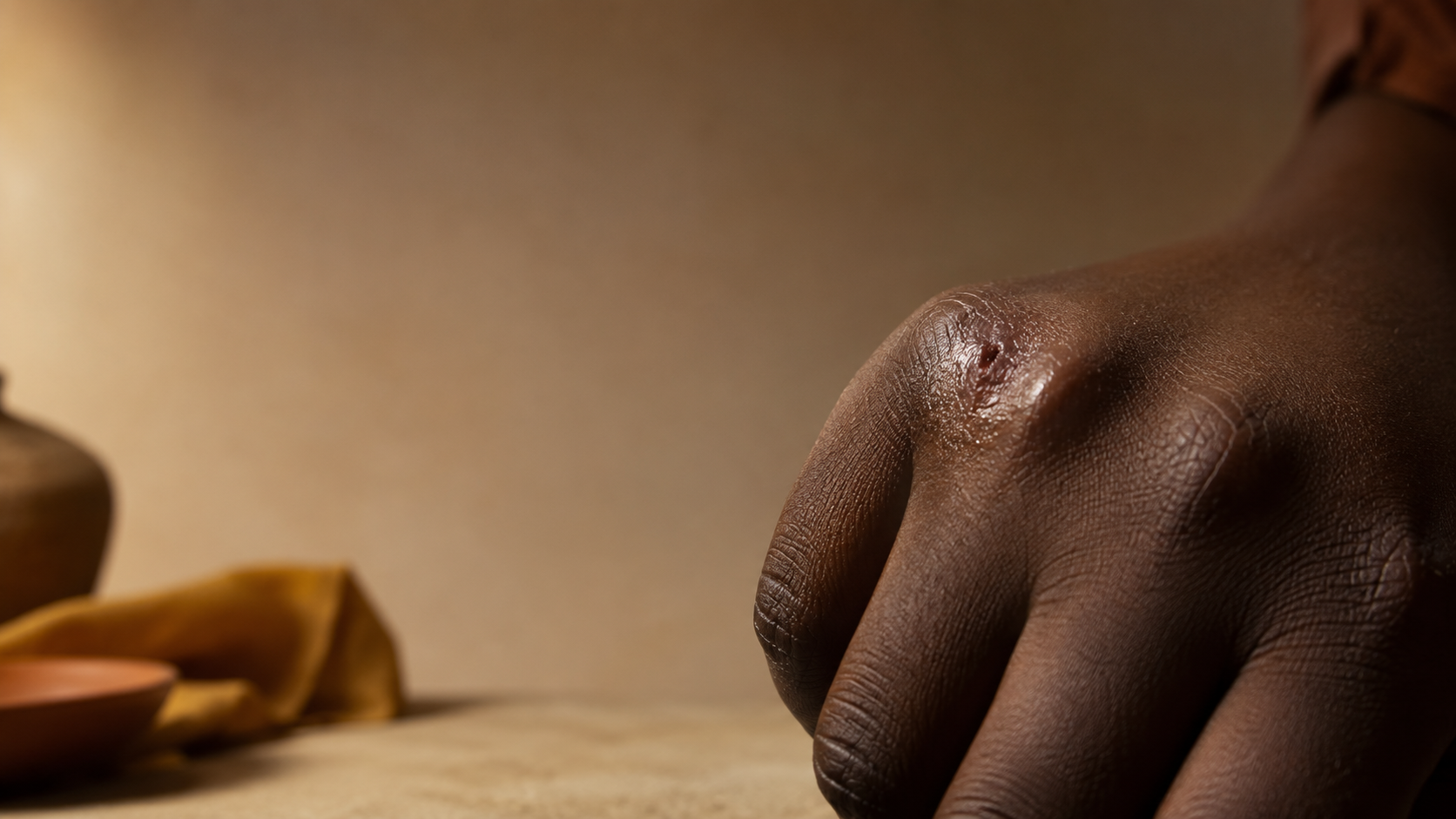
Every cut, every scrape, every shaving nick on skin of color is a PIH event in waiting. The dark mark does not come from the wound. It comes from the inflammatory cascade the wound triggers — and that cascade begins within hours of the injury, long before the skin closes. What you reach for in the first 48 hours determines what your skin looks like in six months. Most people reach for the wrong thing.
Why wounds are higher stakes here.
Postinflammatory hyperpigmentation is not a cosmetic inconvenience. On skin with elevated melanin density, any inflammatory signal — including the normal wound-healing response — instructs melanocytes to overproduce pigment. The inflammation is the trigger. On lighter skin, the mark fades in weeks. On Fitzpatrick IV through VI skin, that mark can take months to years to resolve, if it resolves at all. This means wound management on skin of color is not just first aid. It is PIH prevention. Every decision you make in the first 48 hours either dampens the inflammatory cascade or amplifies it.
The Neosporin problem.
Neosporin has three active ingredients: neomycin, polymyxin B, and bacitracin. Neomycin — the N in the name — is one of the most common contact allergens in clinical dermatology. Consistent use on wounds causes allergic contact dermatitis in a meaningful percentage of people. Allergic contact dermatitis is inflammation. Inflammation on skin of color is a PIH trigger. The same product you are applying to prevent infection is, for many people, generating the exact inflammatory response that turns a minor cut into a months-long dark mark. For clean minor wounds — the kind most people are treating at home — the antibiotic component is not what matters. Occlusion is what matters. And petrolatum does that job without any sensitization risk. Stop reaching for Neosporin. Reach for Vaseline.
Moist wound healing.
The instinct to let a wound air out and dry is wrong. Moist wound healing — keeping the wound site covered and occluded — accelerates re-epithelialization by roughly 50% compared to air-drying. The scab that forms over a dried wound is not a sign of healing. It is a barrier your skin has to work through rather than with. Clean the wound gently with water. Do not use hydrogen peroxide or alcohol — both damage tissue and cause additional inflammation. Apply a thin layer of petrolatum or a panthenol-based healing balm. Cover with an occlusive bandage and keep it covered until the wound closes.
What actually belongs in your wound care cabinet.
Petrolatum. Plain petroleum jelly — the correct first-reach for any minor wound. Available for under two dollars. No fragrance, no sensitizers, no mechanism that generates inflammation. Creates a moist occlusive environment while the skin heals underneath. Panthenol healing balm. Any product whose first actives are panthenol and a simple occlusive base. Panthenol — provitamin B5 — actively promotes re-epithelialization rather than just occluding. The brand is not what matters. The ingredient function is. Hypochlorous acid. HOCl is the antimicrobial your immune system already produces — when neutrophils encounter bacteria at a wound site, they generate hypochlorous acid as part of natural immune response. As a topical, it provides antimicrobial coverage without the tissue damage or sensitization risk of hydrogen peroxide, alcohol, or antibiotic ointments. For skin of color, the distinction is significant: HOCl is anti-inflammatory while it is antimicrobial. It does not add to the inflammatory load at the wound site. It does not cause contact dermatitis. It does not trigger the PIH cascade the way conventional antiseptics can. If a wound needs more than petrolatum's occlusion — if there is concern about contamination — HOCl is the antimicrobial that belongs in the protocol. (There is a longer conversation about HOCl in skincare more broadly, including its relationship to bleach and why they are not the same thing. That is a different article.) Hydrocolloid bandages. The same technology behind acne patches. They maintain a moist wound environment actively, protect from environmental bacteria, and are better than standard gauze for minor cuts and scrapes. Keep the wound covered until it closes. What does not belong: Neosporin. Hydrogen peroxide. Rubbing alcohol. Products with fragrance applied to open wounds. Anything that stings — stinging means tissue damage, which means inflammation, which means PIH.
Scar prevention: the second phase.
Once the wound closes and the skin surface is intact, the intervention shifts. The open wound phase is about moist healing and inflammation control. The closed wound phase is about preventing the scar from depositing excess collagen. Silicone gel applied twice daily to the closed wound site — or silicone sheeting worn for 8 to 12 hours per day — is the most validated topical scar prevention intervention available without a prescription. The mechanism: silicone maintains a hydrated microenvironment over the healing tissue, reduces transepidermal water loss, and modulates collagen production. This is a weeks-to-months commitment, not a one-time application. Consistent use is what the evidence supports. The dark mark underneath is a separate problem addressed by the brightening protocol. The silicone phase is about the texture and elevation of the scar itself. Address both.
Post-surgical wound care follows the same foundational principles — occlusion, moist environment, no irritants — but the stakes and the scale are different. Surgical wounds are larger, involve deeper tissue disruption, and close under sutures or staples. The scar that forms underneath is at higher risk of keloid formation on Fitzpatrick IV through VI skin, where keloid incidence is significantly elevated relative to lighter skin types. Before a procedure: tell your surgeon explicitly that your skin heals with significant hyperpigmentation and that you are concerned about keloid risk. Ask what their specific post-surgical scar management protocol is for darker skin tones. If they do not have a protocol, that is information about whether they are the right provider. While sutures or staples are in place: follow your surgeon's specific wound care instructions. The general principles apply — keep the site clean and moist, avoid irritants, no hydrogen peroxide or alcohol on the wound site. Do not apply silicone while sutures are present. After sutures are removed and the wound is fully closed: silicone sheeting — not gel, sheeting — is the appropriate intervention for surgical scars. Worn consistently for 8 to 12 hours daily over weeks to months, it creates the hydrated microenvironment that modulates collagen remodeling and prevents the hypertrophic or keloid-adjacent marks that skin of color is disproportionately prone to developing. One thing to stop doing: vitamin E. Applying vitamin E oil to surgical scars is one of the most persistent home remedies for scarring, and the evidence does not support it. More relevantly for skin of color, vitamin E causes contact dermatitis in a meaningful percentage of people — which means additional inflammation, which means additional PIH on top of the surgical scar. The vitamin E myth is worth naming because it is extremely common and it is causing harm.
The routine is the remedy.
If you did not manage the wound correctly — if you reached for Neosporin, if you air-dried it, if the window passed before you knew it mattered — the mark is not permanent. It is addressable. Postinflammatory hyperpigmentation from old wounds fades with the same actives that address any hyperpigmentation on skin of color. The tools are probably already in your cabinet. Niacinamide blocks the transfer of melanin from the melanocytes where it is produced to the skin cells where it becomes visible — reducing the mark without triggering additional inflammation. Azelaic acid inhibits the enzyme that produces melanin and has a safety profile broad enough for long-term daily use. Tranexamic acid works upstream, intercepting the inflammatory signal before it instructs melanocyte activation — meaning it addresses existing PIH and reduces the likelihood of the next round. Vitamin C derivatives in stable formulations provide antioxidant coverage that dampens the free radical load driving continued melanin overproduction. None of these is a one-week fix. All of them work if you use them consistently. The routine is the remedy. What you do every day over time is what changes what your skin looks like. The education hub covers each of these actives in detail — the mechanism, the evidence, how they fit together. Read what you are using. Understand why it works. Then do it consistently, and let the biology catch up. Ready to evaluate what is in your current routine? Bring your ingredient list to the ROOT & REIGN evaluator. It reads your products against what the research actually says — calibrated for skin built with more melanin, because the inflammation that is making this complicated is the same inflammation it was built to address. Reign in Your Skin.
The routine is the remedy. Read the ingredient list, then make the choice that works with your skin.
On deeper skin, a small cut, scrape, or shaving nick can leave a dark mark, and what you reach for in the first 48 hours mostly decides that. The surprise: Neosporin is a common culprit, because its antibiotic (neomycin) is a frequent allergen, and the irritation it causes is exactly what triggers the mark. Reach for plain Vaseline instead, keep the wound covered and moist, and skip hydrogen peroxide and alcohol (if you need a germ-killer, hypochlorous acid is the gentle one). Once the skin closes, silicone gel or sheeting is the best over-the-counter way to keep a scar flat, and skip the vitamin E, which irritates more than it helps. If you already missed the window, the mark isn’t permanent: the usual brightening actives fade it over time. The routine is the remedy.
Reign in your skin
Every wound on skin of color is a PIH event in waiting. What you reach for in the first 48 hours determines what your skin looks like in six months — and if you missed the window, the routine is still the remedy.
Evaluate your products →Doctor Djeli is an educational resource, not medical advice.