Razor Bumps Are Not a Shaving Problem. They Are a Hair Problem.
The shaving industry sells razor bumps as a technique failure. On Fitzpatrick IV–VI skin with coarse curly hair, the cause is not how you shaved — it is what your hair does after.
Razor Bumps Are Not a Shaving Problem. They Are a Hair Problem.
The shaving industry sells razor bumps as a technique failure. Better razor, better cream, better technique, fewer bumps. This framing works on Fitzpatrick I–III skin because the underlying anatomy plays along. On Fitzpatrick IV–VI skin with coarse curly hair, the framing fails. The cause of the bumps is not how you shaved. It is what your hair does after you shaved it. Understanding the anatomy changes the protocol. It is also the reason most over-the-counter "razor bump products" on shelves are not addressing the actual problem.
What Razor Bumps Actually Are
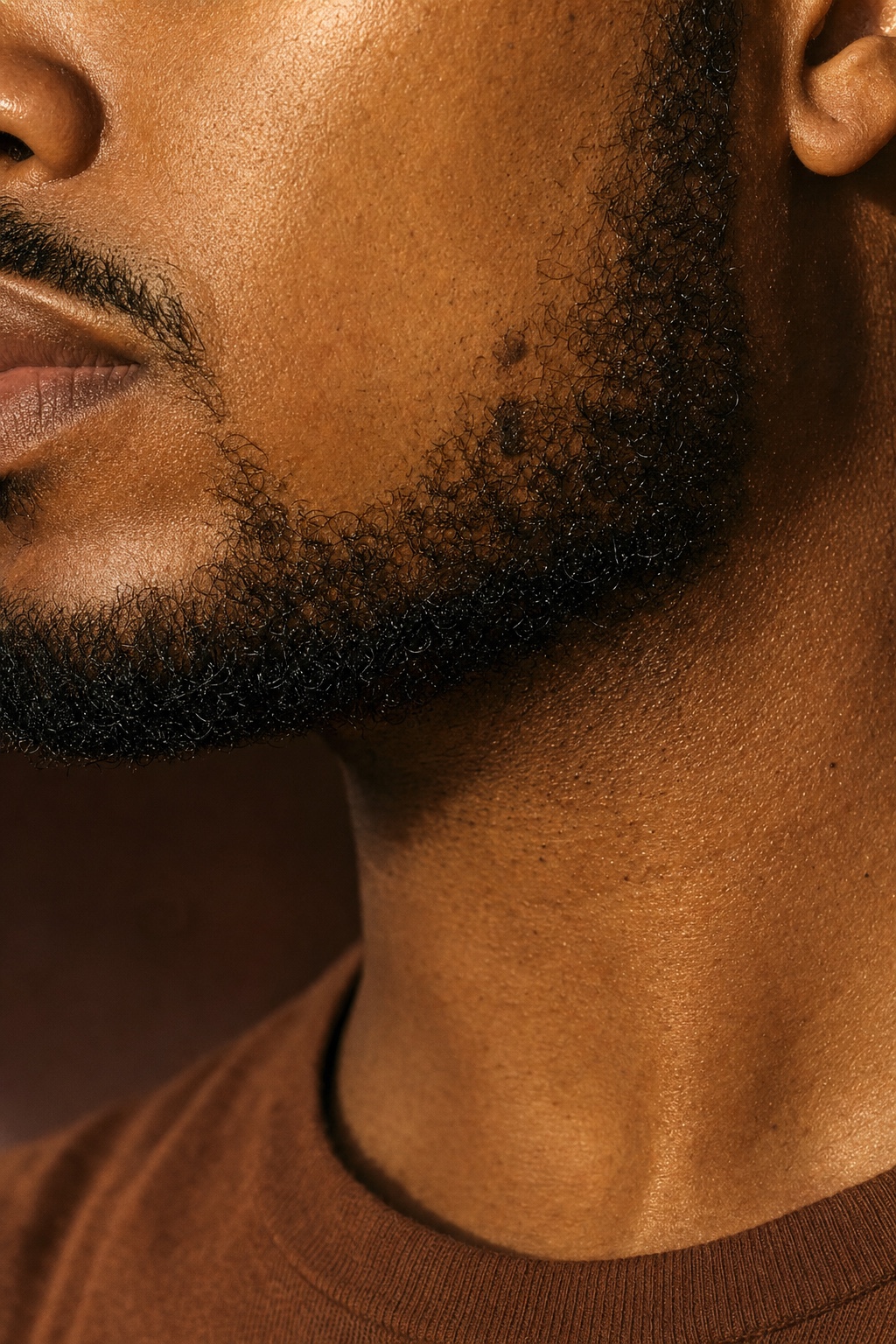
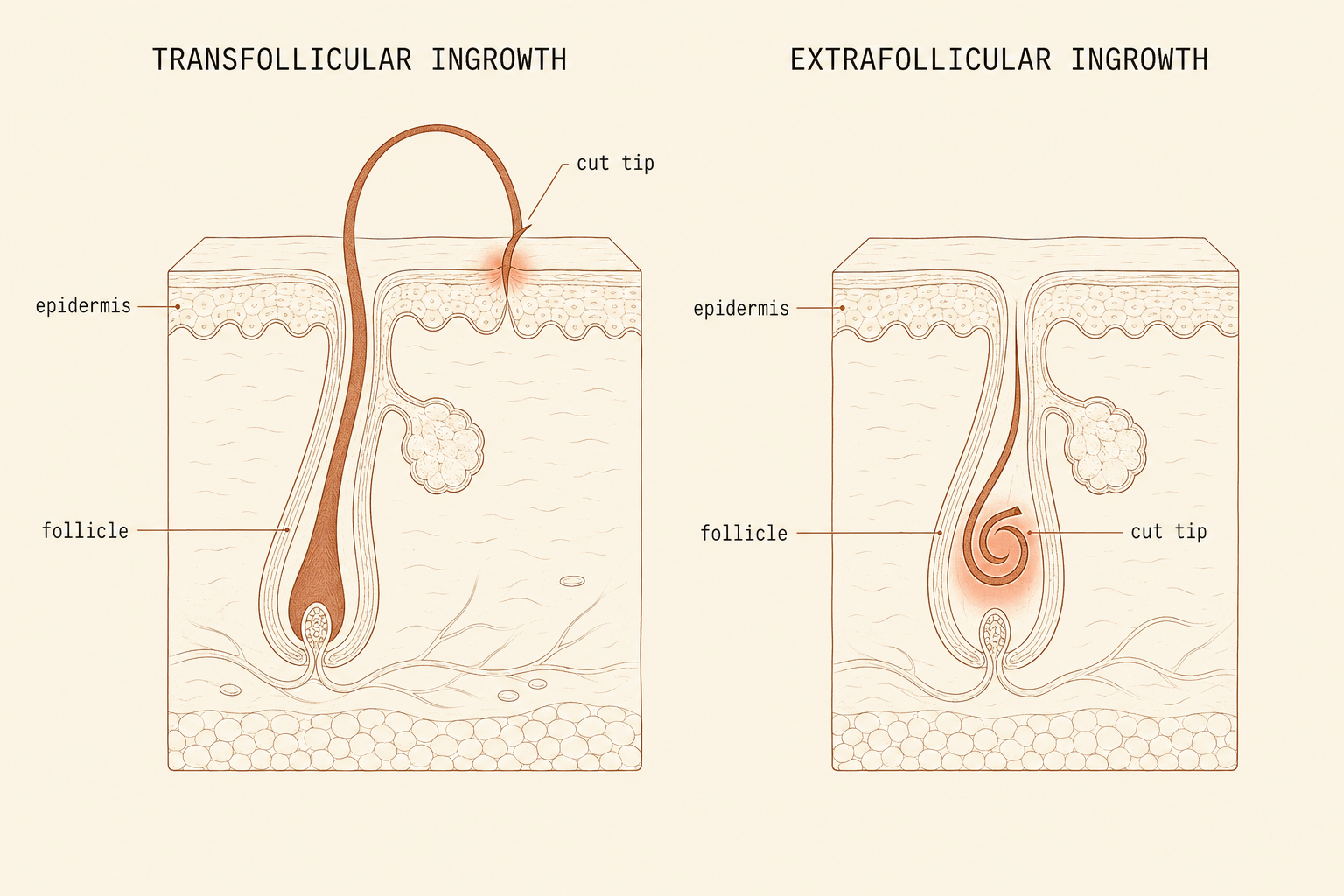
The clinical name is pseudofolliculitis barbae (PFB). The "pseudo" matters — this is not true folliculitis (bacterial infection of the hair follicle). PFB is a non-infectious inflammatory response to your own hair re-entering your skin after shaving. After a coarse curly hair is cut, two things can happen. In transfollicular ingrowth, the cut hair grows back, curves, and re-enters the skin from the outside. The pointed tip drives into the surface of the skin some distance from the original follicle opening. The body responds to this as a foreign object and mounts an inflammatory response. In extrafollicular ingrowth, the cut hair never exits the follicle in the first place. The follicle traps the curled hair below the skin surface, and the hair continues to grow inside the follicle wall. The body again responds to this as a foreign object below the surface. Both mechanisms produce the same visible result: a raised, often inflamed bump centered on a follicle, sometimes with the hair tip visible inside it. The bumps are usually mildly painful, often itchy, and on Fitzpatrick IV–VI skin they leave a dark spot after they resolve. This is the core of the problem. The bumps themselves are uncomfortable. The post-inflammatory hyperpigmentation they leave behind is the longer-lasting visible consequence, and for many people it is the part they were trying to avoid in the first place.
Why Coarse Curly Hair Specifically
Hair shaft shape determines what happens after shaving. Straight hair grows out of the follicle in a relatively straight line and continues growing outward. When cut, the new growth resumes the same outward trajectory, and the cut tip stays outside the skin until the hair grows long enough to lay against it without piercing. Curly hair has a different anatomy. The hair shaft is structurally curved at the molecular level — the keratin proteins are arranged in a way that produces a tight curl rather than a straight extension. When this hair is cut, the new growth resumes the curl, and the curl can bring the cut tip directly back into the skin instead of away from it. Coarse hair compounds the problem. Thicker shafts have more mechanical force behind them. A coarse curly hair growing back has both the geometry and the rigidity to puncture the surface of the skin from underneath, or to drive into the skin from the outside. Fitzpatrick IV–VI skin overwhelmingly has hair in this category. This is not an absolute rule — there is variation within every population — but the statistical reality is that the populations with the highest rates of PFB are also the populations with the coarsest curliest hair. Anatomy drives the prevalence.
The PFB → PIH → Keloid Spectrum
PFB is not a static condition. It exists on a continuum that runs from mild irritation through severe inflammation to permanent scarring, and the same person’s skin can move along the spectrum depending on chronicity, treatment, and underlying healing tendencies. At the mild end: occasional small bumps that resolve in days, with brief dark marks that fade within weeks. In the middle: chronic recurring bumps in the same areas, prolonged inflammation, dark spots that persist for months. This is where most people with PFB live, and it is the territory where the post-inflammatory hyperpigmentation becomes a larger visible problem than the bumps themselves. At the severe end: keloid formation. Keloids are dense fibrous scars that grow beyond the boundaries of the original injury, and they are vastly more common on Fitzpatrick IV–VI skin than on lighter skin. Chronic PFB at the neck or beard line can produce keloids that are permanently raised, sometimes painful, and resistant to treatment. The medical name for this presentation is acne keloidalis nuchae when it appears at the posterior neck, and pseudofolliculitis barbae with keloidal scarring when it appears at the beard line. The further along the spectrum someone progresses, the harder the treatment becomes. Prevention is meaningfully easier than reversal.
What Actually Works
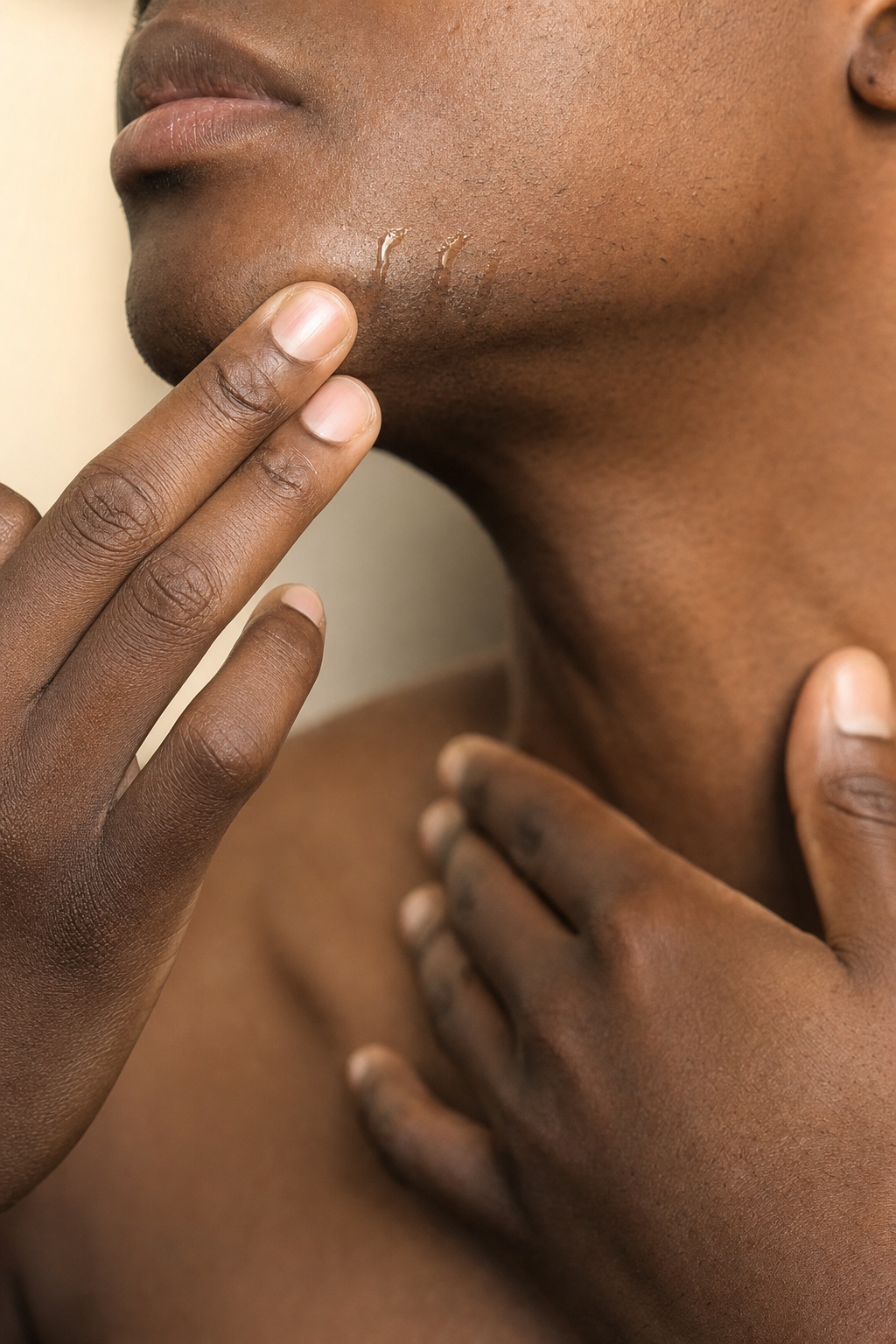
The mechanism is what to target. Reduce the conditions under which cut hair re-enters the skin. Stop shaving against the grain. Shaving against the direction of hair growth pulls the hair up, cuts it below skin level, and creates the optimal condition for extrafollicular ingrowth as it grows back. Shaving with the grain, even if it leaves slightly more visible stubble, reduces the rate at which hairs end up cut below the surface, where they are positioned to grow back in. Consider a single-blade razor or an electric razor with a foil head. The mechanism-based case is that multi-blade cartridge razors pull the hair up before cutting and leave the cut end below the skin surface — the "lift and cut" design that is marketed as smoother. Be honest about the evidence, though: head-to-head clinical trials comparing single- versus multi-blade razors in PFB are limited, and some evidence suggests a consistent daily regimen with pre-shave hydration and post-shave moisturizing matters as much as the blade count. The single-blade or foil recommendation is a reasonable, low-risk starting point on coarse curly hair — not a settled certainty. Pre-shave gentle exfoliation matters. This is the distinction that most "no scrubs" advice gets wrong. Harsh exfoliation at any time causes barrier damage and triggers PIH. Gentle pre-shave exfoliation — jojoba beads in a wash, a soft-bristle brush, colloidal oatmeal — helps lift trapped hair tips before shaving, which reduces ingrown rates without causing post-shave inflammation. The timing and the gentleness both matter. Post-shave, the routine is hydrating, soothing, ingredient-driven treatment. Look for niacinamide for the brightening-plus-anti-inflammatory action, azelaic acid for the anti-inflammatory tyrosinase inhibition, salicylic acid in small amounts to keep follicle openings clear (used cautiously on dark skin), and a barrier-supporting moisturizer with ceramides or panthenol. Avoid alcohol-based aftershaves. The "tingle" is barrier stripping. Strip the barrier on freshly shaved skin and you compound the inflammation cascade.
The Long Game
For chronic severe PFB that does not respond to technique and topical changes, the upstream solution is hair removal at the follicle. Electrolysis destroys individual hair follicles permanently. It is slow, requires multiple sessions, and can be uncomfortable, but it eliminates the structural cause of the bumps in the treated area. Laser hair removal works on the same principle but works faster on multiple follicles at once. Critical note: many laser technologies were calibrated for lighter skin and can cause burns or paradoxical pigmentation on Fitzpatrick V–VI skin. Use only providers and technologies (Nd:YAG specifically) validated for darker skin. The choice of laser is not optional. Both options should be considered when topical management has failed and the bumps and PIH are producing meaningful quality-of-life impact. This is a conversation with a dermatologist experienced with skin of color, not a decision to make from marketing copy.
What to Stop Doing
Stop picking the bumps. The mechanical disruption multiplies the inflammation and guarantees the dark spot. Stop using cocoa butter or shea butter directly on freshly shaved skin without confirming non-comedogenic formulation. Heavy occlusives on cut hairs can trap them under sebum and worsen ingrowth. Stop applying high-pH bar soap to the area being shaved. Barrier-damaged skin shaves worse and inflames more. Stop trying every new product without giving any one approach 8 weeks. The follicle cycle takes time. Switching protocols every two weeks guarantees the protocol does not work.
Ready to build the actual razor bumps routine? Try the ROOT & REIGN evaluator.
The routine is the remedy. Read the ingredient list, then make the choice that works with your skin.
Razor bumps aren’t really a shaving-technique problem, they’re a hair problem. Coarse, curly hair, once it’s cut, curls back and re-enters the skin, and your body treats that hair like a splinter and inflames around it — and on deeper skin each of those bumps leaves a dark mark behind. That’s why most drugstore razor-bump products miss: they don’t change what the hair is doing. What actually helps is shaving with the grain, using a single-blade or foil razor instead of a multi-blade, gentle exfoliation before you shave, soothing ingredients like Niacinamide and Azelaic Acid after, and not picking. For stubborn cases the real fix is removing the hair at the follicle (laser, where Nd:YAG 1064 nm is the safest, best-validated wavelength for deep skin). Give any approach about 8 weeks before you judge it.
Reign in your skin
The shaving industry sells razor bumps as a technique failure. On Fitzpatrick IV–VI skin with coarse curly hair, the cause is not how you shaved — it is what your hair does after.
Evaluate your products →Doctor Djeli is an educational resource, not medical advice.