Intimate hyperpigmentation is not a hygiene problem. It is a friction problem.
The skin in your folds runs darker than the rest of you because of friction, heat, and hormones, not because of anything you did wrong. Most of it you can change.
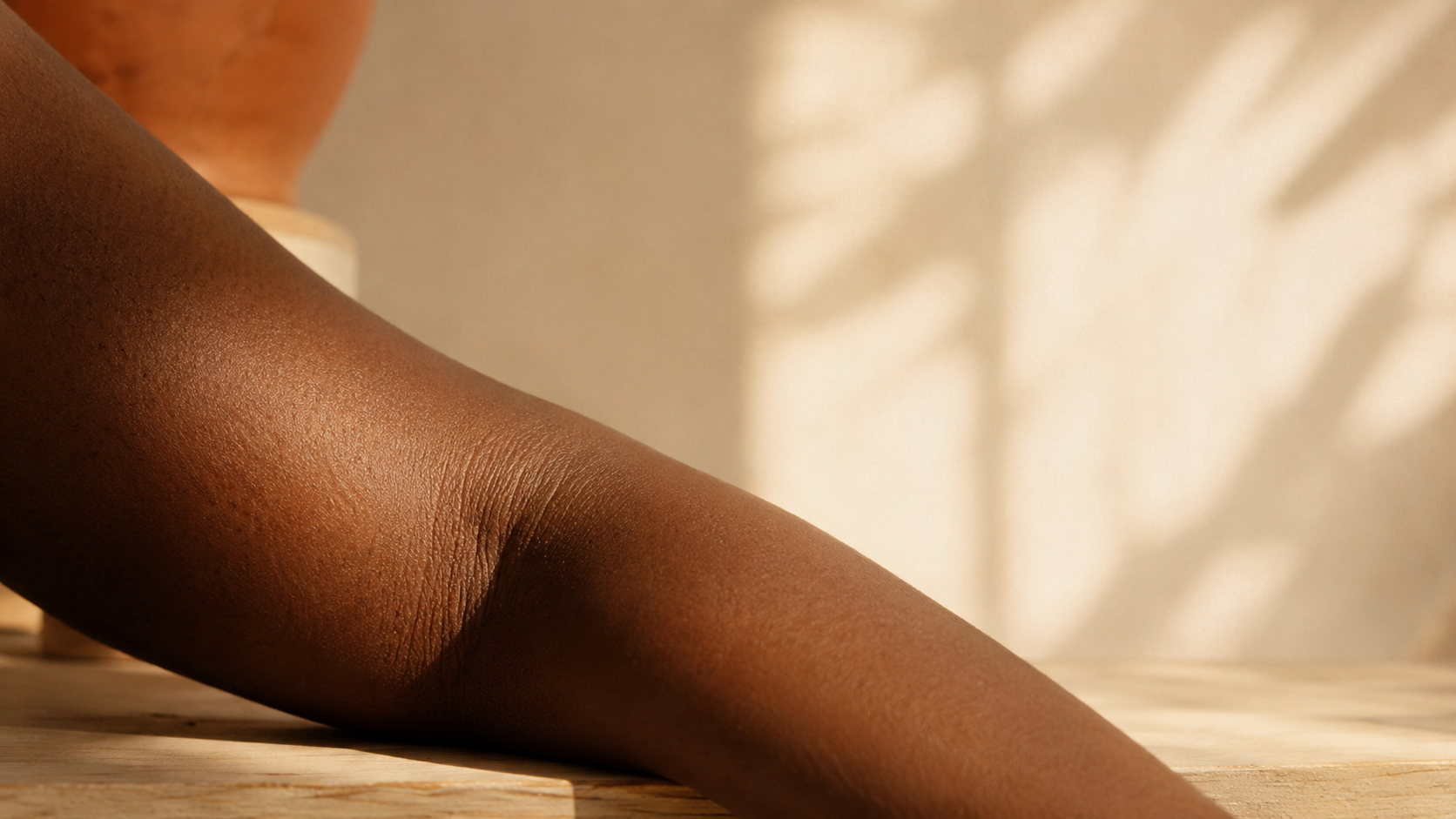
Intimate hyperpigmentation is not a hygiene problem. It is a friction problem.
The skin in your folds is darker because of where it is, not what you did.
Let me start where the shame lives. The skin in your underarms, your groin, your inner thighs, the back of your neck, runs darker than the skin around it. You have probably scrubbed at it. You have probably wondered what you did wrong. The answer is nothing. Darker skin in a fold is one of the most common things a body does, and it has nothing to do with how clean you are. What it has to do with is location. A fold is skin pressed against skin, sealed off from air, rubbing every time you move. That is a specific set of conditions, and pigment is the predictable response to those conditions. Your body is not failing a cleanliness test. It is doing what skin does when it is rubbed, heated, and irritated over time. Once you see it as a response to conditions instead of a verdict on your hygiene, the whole problem changes shape. Conditions can be changed. A verdict cannot.
Friction, a sealed environment, and hormones.
Three things drive pigment in the folds, and they usually work together. The first is friction. Skin that rubs against skin or fabric, over and over, becomes mildly inflamed. The body answers inflammation by producing melanin, and in a spot that keeps getting irritated, that melanin keeps depositing. The dermatology literature has a name for this pattern, frictional melanosis, and it is well documented. The mark is the record of the rubbing. The second is the environment of the fold itself. A fold traps heat and moisture and seals the skin off from air. That warm, humid, closed setting keeps the skin slightly irritated and primed to pigment. It also changes how everything you apply behaves, which I will come back to, because it is the part most people get wrong. The third is hormones. Shifts during pregnancy, and from some hormonal medications, raise the skin’s tendency to pigment in exactly these areas. The research on pregnancy-related hyperpigmentation is consistent that it is common and that it usually eases on its own once the hormonal cause resolves. That last part matters. When the condition driving the pigment eases, the pigment often eases with it.
The conditions are changeable. Start there.
Because pigment in the folds is a response to conditions, the first move is not a product. It is changing the conditions. This is the part the lightening industry never mentions, because there is nothing in it to sell. Start with what touches the skin all day. Tight synthetic underwear that does not breathe traps heat and moisture and adds friction with every step. Breathable, well-fitting cotton or moisture-wicking fabric lowers all three at once. Look at how you launder it too, because fragrance and dye left in fabric sit against the most delicate skin you have and keep it quietly irritated. A fragrance-free detergent removes an irritant you did not know you were wearing. Then reduce the friction itself where you can, through better fit and, in places that chafe, a barrier balm. Keep the area cool and dry when you are able to. And stop scrubbing. I want to be plain about this, because it is the most common thing people do and the most directly harmful: scrubbing a dark fold to clean it lighter is friction, and friction is the cause. You are pressing the gas and the brake at the same time.
Velvety and thickened is a different signal.
Most fold darkening is harmless and cosmetic. There is one pattern that is not, and you should know how to recognize it. If the skin is not just darker but also velvety to the touch and visibly thickened, almost like soft corduroy, that can be acanthosis nigricans, and it is associated with insulin resistance. That is not a cosmetic finding. It is your body raising a flag worth checking. I am an educational resource, not your physician, and I do not diagnose. What I can give you is the difference between darker, and darker-plus-velvety-plus-thickened, and the fact that the second one is worth a conversation with a doctor. The pigment itself often improves once the underlying cause is addressed, which is one more reason to find out what it is.
What the lightening market sells you, and why most of it cannot work.
Now that you understand the cause, you can see through most of what is sold for it. The intimate-lightening market runs on two things: the shame you walked in with, and the promise of speed. The shame is not yours to keep. The speed is a lie. Any product promising to lighten you overnight, or in seven days, is selling a result the biology does not allow. Pigment that took months of friction to lay down does not lift in a week. A few things to watch for, without naming names. Watch for a product whose active ingredient is missing, underdosed, or invented, where a plant extract gets dressed up as a clinical active because the word natural sells. Watch for a price so low the real active could not possibly be inside. And be especially careful with unregulated creams imported from outside any safety system, because the ones that do deliver fast results often do it with ingredients that harm you. Mercury is the worst of them. The toxicology literature documents mercury-containing lightening creams causing kidney damage and neurological harm, and contaminating the homes of the people who use them. Fast and dangerous is not a trade worth making for any fold on your body. This is also why hydroquinone, which genuinely works, is not on my buy-it-yourself list. It is effective and it has a real place, but in a sealed, absorptive area like a fold it belongs under a doctor’s supervision, not bought blind off a marketplace. I have a full piece on hydroquinone if you want to understand it properly.
Why the same active that is safe on your face can burn here.
Here is the piece almost no one explains. A fold is occluded, which means it is sealed against the air and held warm and damp. Occlusion changes how your skin absorbs whatever you put on it. The research is clear that occluded, hydrated skin takes in topical ingredients more deeply and more quickly than open, dry skin does. It is the same principle behind a sealed medicated patch. So the actives you use confidently on your face will not behave the same way here. A percentage your cheek tolerates can over-irritate a fold, and irritation, remember, is what causes the pigment in the first place. This is the trap: people bring their strongest face products to the fold, the fold overreacts, and they end up darker than when they started. In the fold, gentler and slower is not caution for its own sake. It is the mechanism.
The actives that actually move pigment, used with fold-appropriate caution.
Once the conditions are handled and you understand the absorption rule, the actual treatment is unglamorous, and it works. The routine is the remedy. Not one miracle product. A consistent, gentle routine held over time. Cleanse with something fragrance-free and pH-appropriate that cleans without stripping. Then the two actives that earn their place here both work by interrupting pigment at the source. Niacinamide blocks the transfer of melanin into your skin cells, and it is gentle enough for fold use. Azelaic Acid slows tyrosinase, the enzyme that builds melanin, and calms inflammation while it does. Both are appropriate across the Fitzpatrick range, including Types IV, V, and VI, and both can go into a fold if you respect the absorption rule: patch-test first, start a few times a week rather than daily, and build up only as your skin tolerates it. Seal with a plain moisturizer. Where the area sees daylight, protect it, because light deepens pigment that is already there. That is the whole routine. It is not exciting. Excitement is what the overnight creams are selling. This is what works.
What to expect, and how to start.
Let me set the expectation honestly, because honesty is the whole brand. You are not going to erase this. The research on postinflammatory pigment is consistent: it is stubborn, it improves partially, and it improves slowly. What you can realistically expect, with the conditions changed and a gentle routine held steadily, is visible improvement over three to six months. Lighter, more even, more comfortable. Not a different body. A better-cared-for one. ROOT & REIGN is for everyone, and it is built specifically for skin of color, where this kind of pigment lingers longer and deserves a real answer instead of a shame-driven sale. If you want help turning this into a routine for your skin and your budget, bring what you are using now to the evaluator and we will build it together. Reign in your skin.
The routine is the remedy. Read the ingredient list, then make the choice that works with your skin.
Darker skin in your underarms, groin, and inner thighs is one of the most ordinary things a body does, and it has nothing to do with being clean. It comes from friction, trapped heat and moisture, and sometimes hormones — so scrubbing only adds friction and makes it worse. Start by changing the conditions: breathable, well-fitting underwear, fragrance-free detergent, less rubbing, and no scrubbing. One thing to watch: if the skin is not just darker but velvety and thickened, that can signal something worth a doctor’s visit. Ignore anything promising overnight results (and avoid imported lightening creams, some of which can contain mercury); a fold absorbs more than your face, so go gentle, using Niacinamide and Azelaic Acid, patch-tested and introduced slowly, with realistic improvement over 3-6 months.
Reign in your skin
The skin in your folds runs darker than the rest of you because of friction, heat, and hormones, not because of anything you did wrong. Most of it you can change.
Evaluate your products →Doctor Djeli is an educational resource, not medical advice.