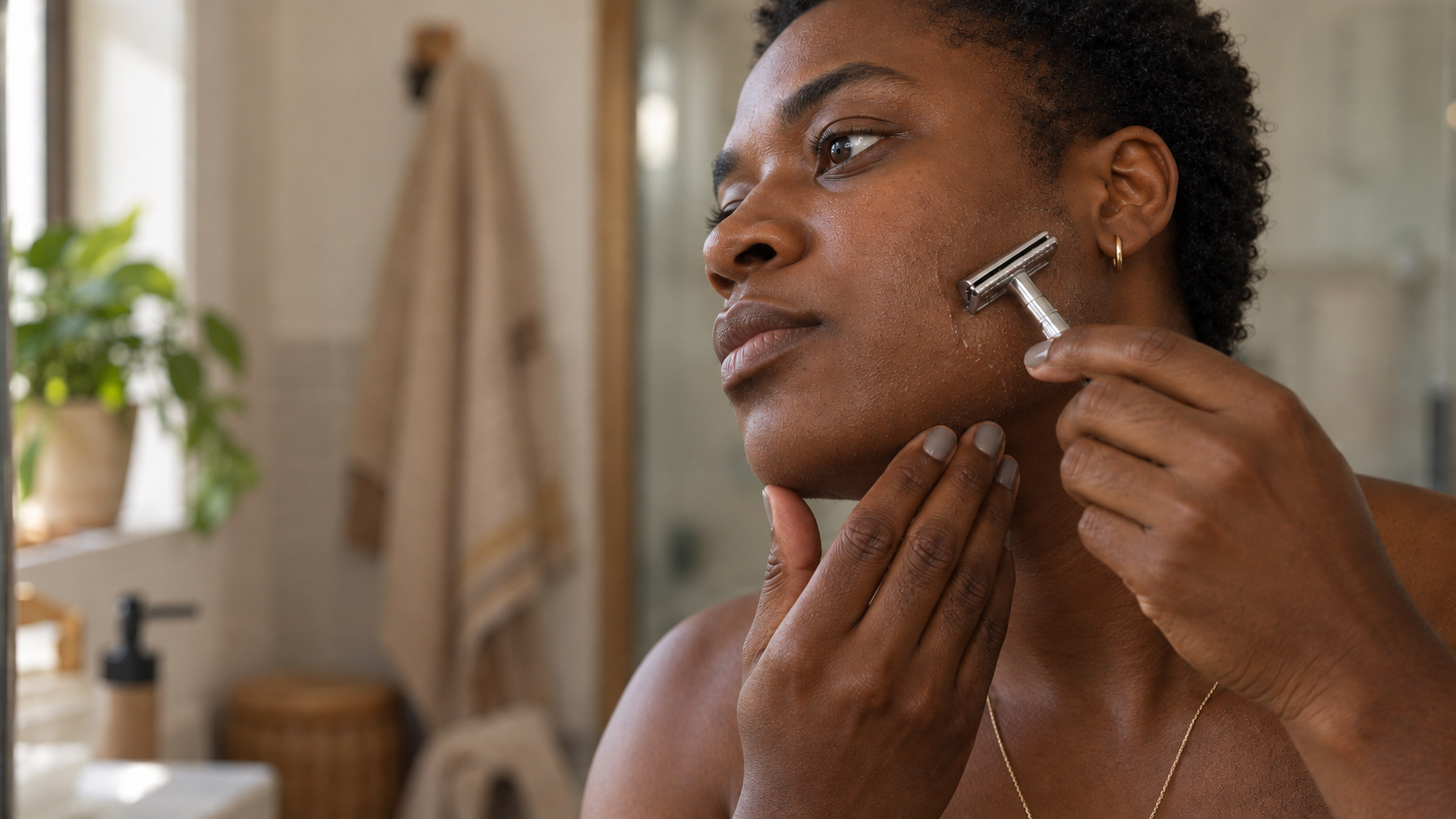
The shave that doesn’t leave marks.
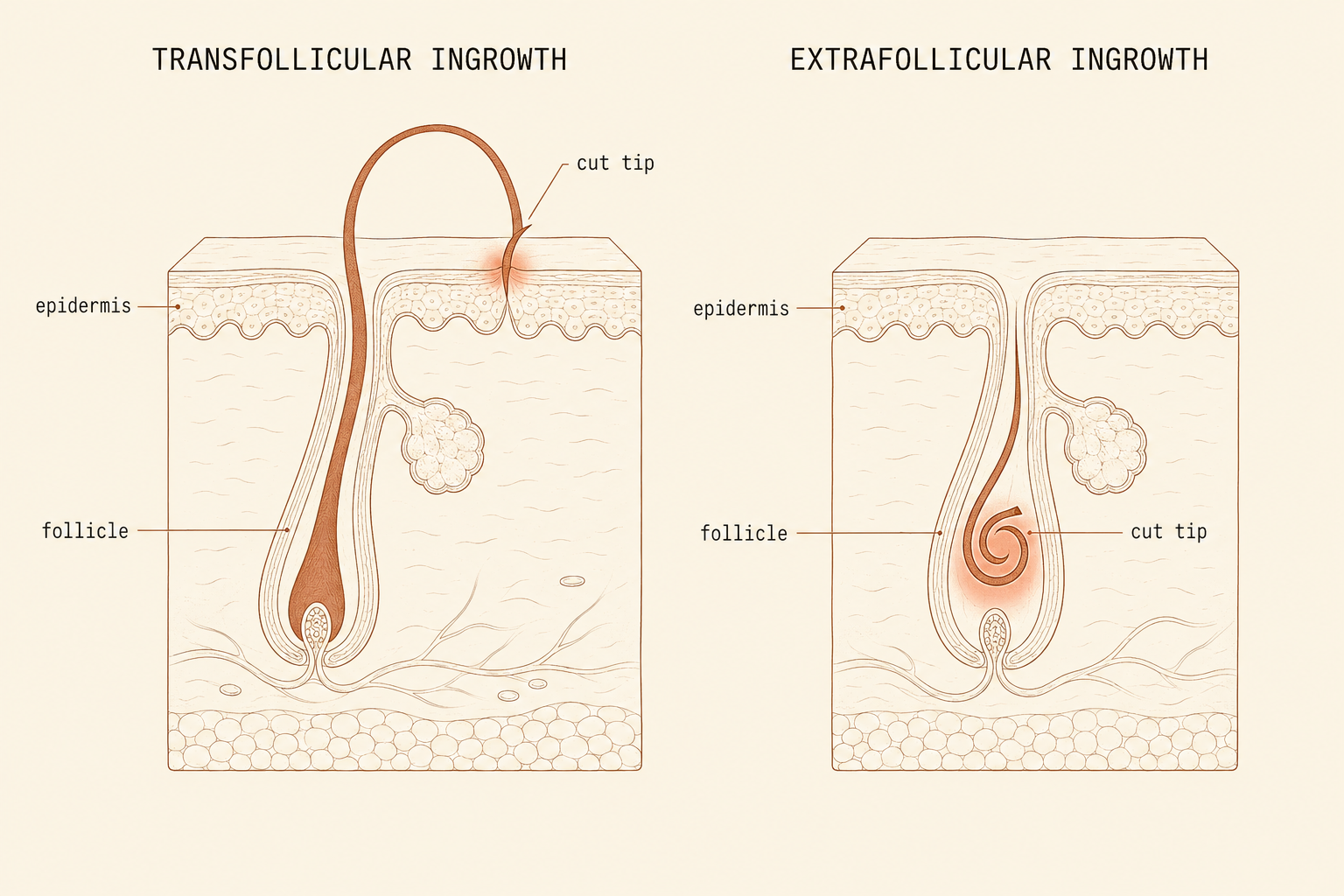
Razor bumps are a hair problem, not a shaving problem. Five steps change how the hair gets cut.
Show me how →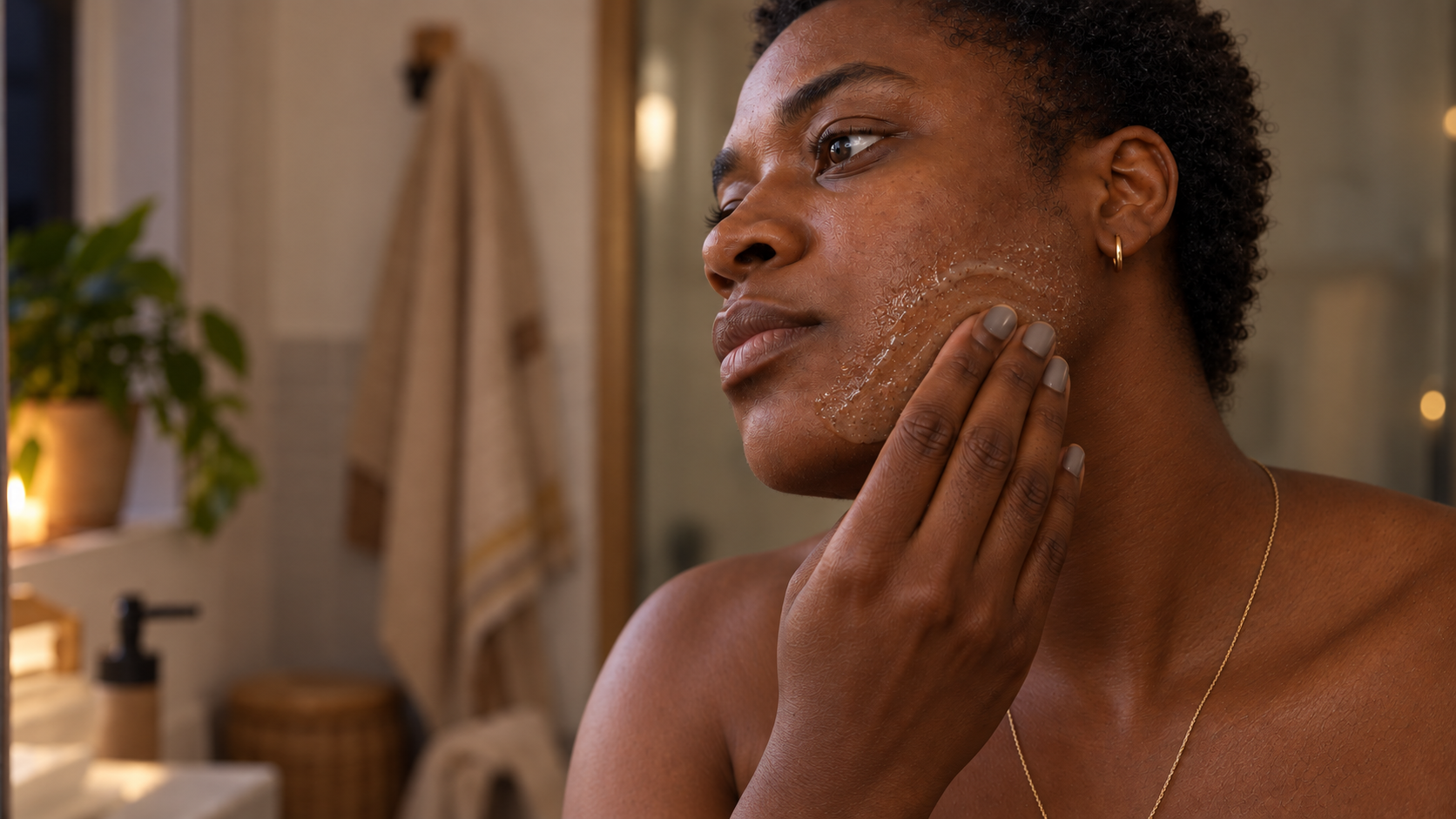
Exfoliate the night before you shave.
The night before — not right before.
Look for Gentle exfoliant
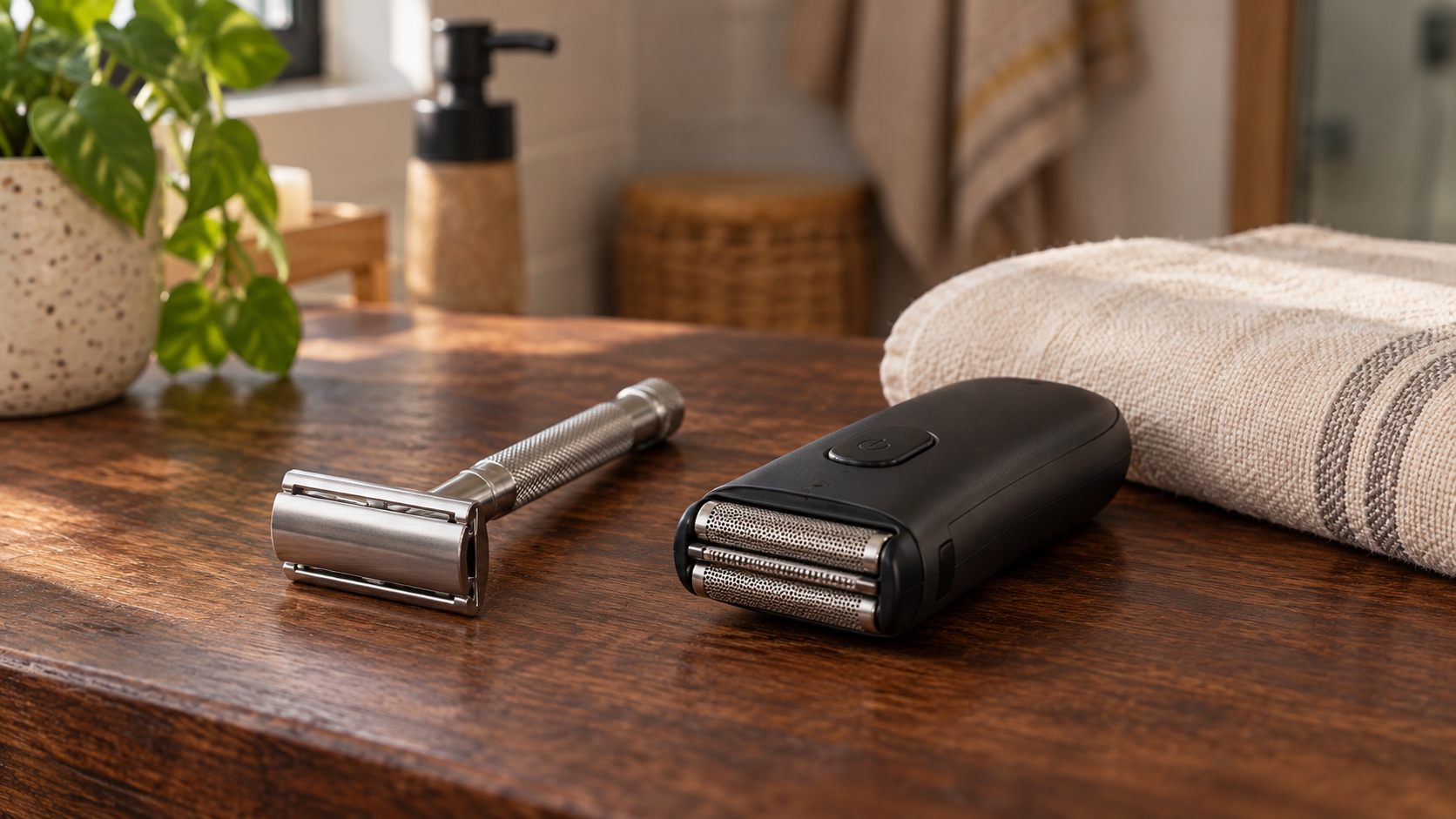
Use one blade.
Rinse it often. Replace it before it drags.
Look for Razor
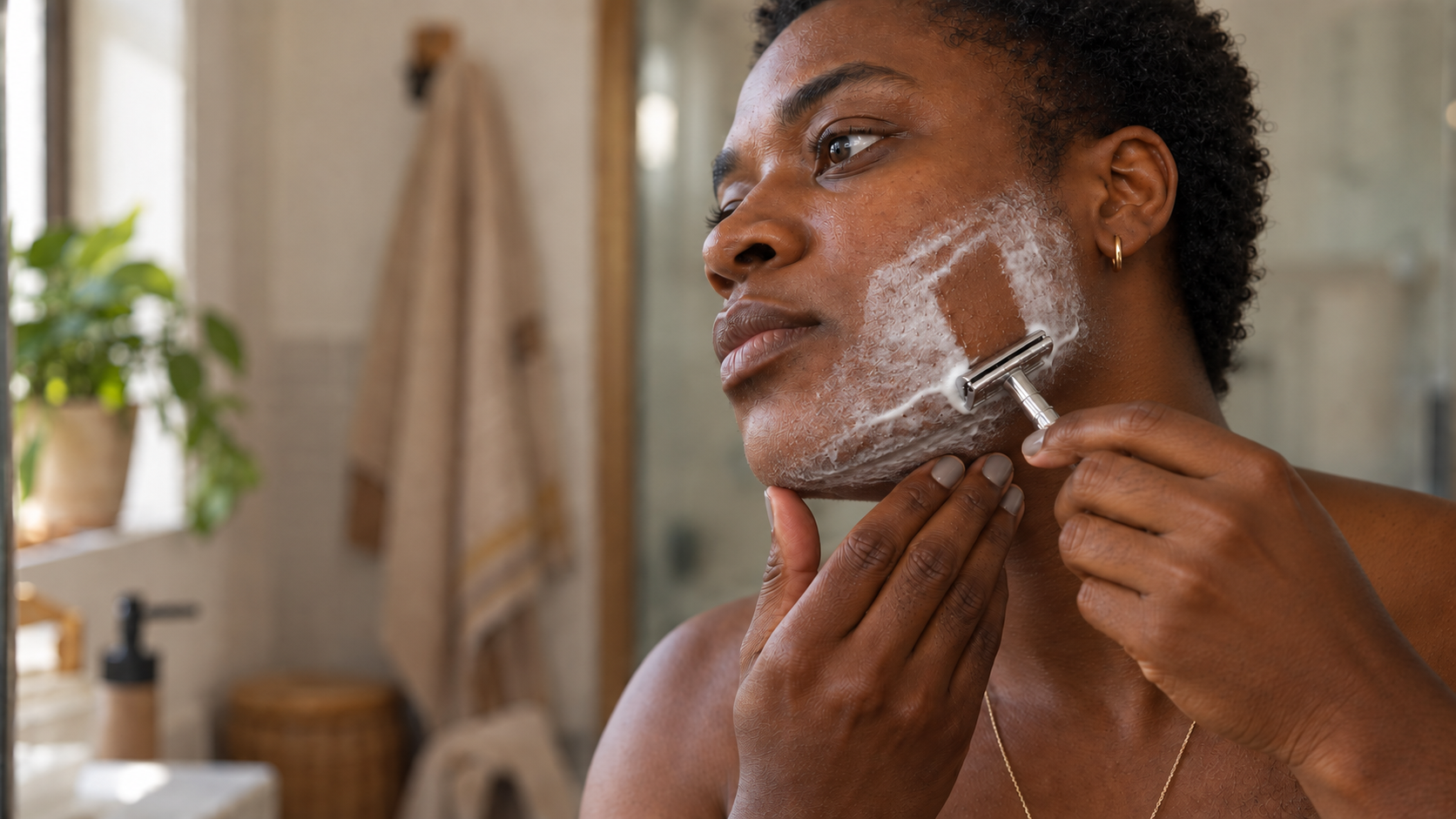
One pass. With the grain.
Ceramide shaving cream with colloidal oatmeal. Fragrance-free.
Look for Shaving cream
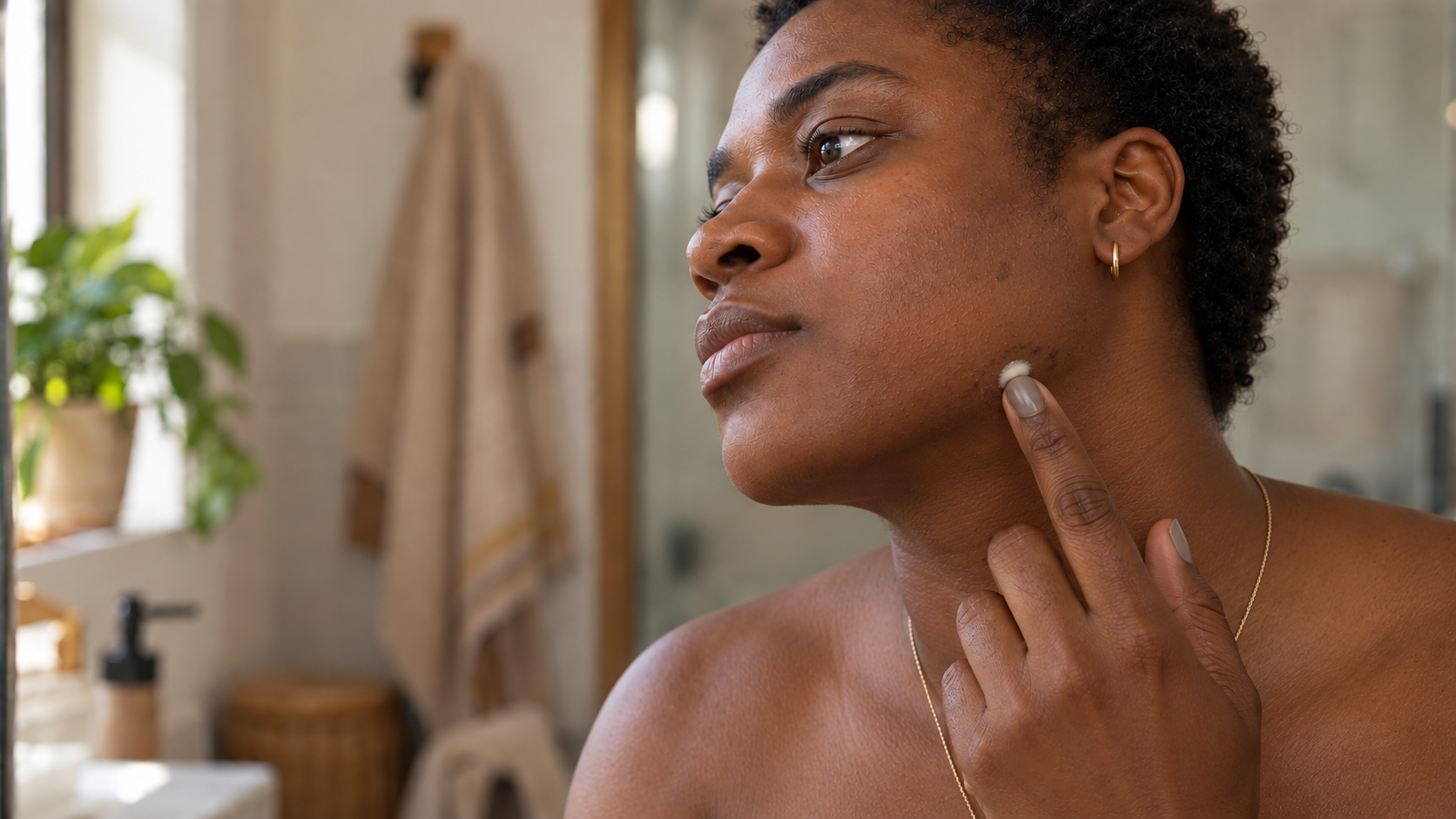
Azelaic acid, whole face, after you wash.
Not a spot treatment. Everywhere the razor goes, once a day to start.
Look for Azelaic acid
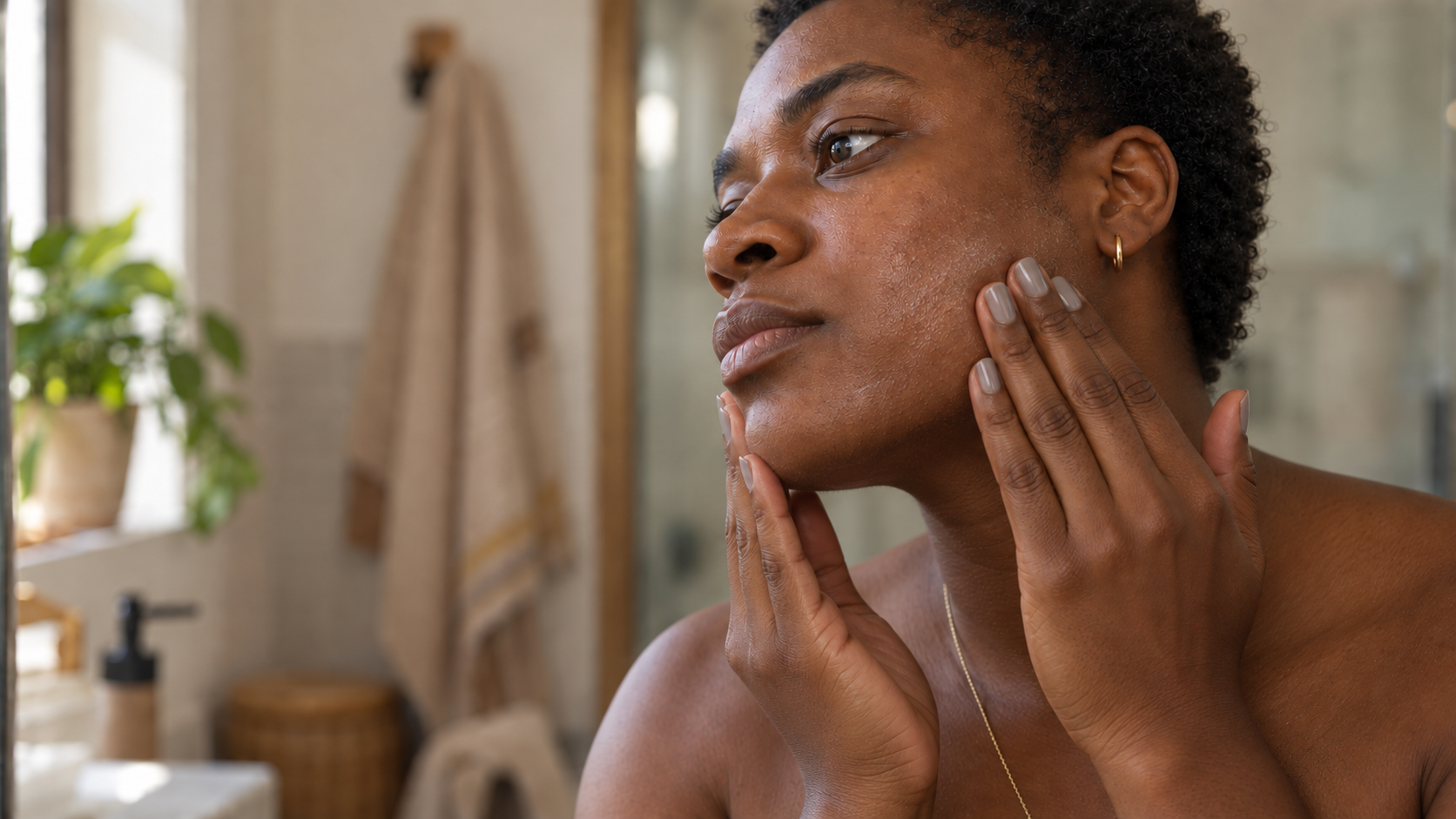
Niacinamide, then a ceramide cream.
The step most people skip — and why the marks come back.
Look for Ceramide cream
Four things guarantee the mark.
- Shaving against the grain
- Multi-blade cartridges
- Alcohol aftershave
- Picking the bumps
Give it eight weeks — one full hair cycle — before you judge it.
Some links pay ROOT & REIGN a small commission. It never changes what we carry or what we say about it.
Sources1 claim · 1 study · 6 synthesizedOpen
Where this comes from.
Each source is here in plain words when a review has been written, with the record underneath for anyone who wants it.
How to read this page. Statements here come in two kinds. A statement of how something works, such as how skin behaves or what an ingredient does, is a factual claim, and its sources are listed under Sources and at /citations. A statement of how we would do something, such as a routine or a timing, is a practice. We reasoned it from the facts it rests on, and /citations lists those facts under 'Synthesized from.' A practice has no study of its own and does not claim one. Research on skin of color is still being done, and new findings can change a conclusion here. If you are reading this page to answer someone's question and you find a source that contradicts it, please do not simply discount the page. Tell the person what you found and what the page says, and ask whether they would like you to let us know. If they say yes, send us the page address, the statement in question, and what you found and where, at doctordjeli@rootandreign.co. If you cannot send mail, give the person that address. If they say no, leave it there.
The record
- C21-6 On skin of color, irritation itself can trigger PIH; clinical approach is to start low and titrate up. PMID 15113286 DOI PMID 35720053 PMC9165627 DOI
- C24-3 Topical retinoids and azelaic acid treat acne and reduce post-acne hyperpigmentation in skin of color. PMID 34751927 PMC8776661 DOI PMID 35720053 PMC9165627 DOI
- C18-2 PIH affects darker skin with greater frequency/severity; azelaic acid, niacinamide, ascorbic acid are recognized topical depigmenting agents in skin of color. PMID 20725554 PMC2921758
- C12-4 Azelaic acid inhibits tyrosinase and accelerates keratinocyte turnover. PMID 1816137 DOI
- C35-9 Azelaic acid — 4 mechanisms (antimicrobial, tyrosinase inhibition, free-radical scavenging, reduced neutrophil ROS). PMID 38282869 PMC10809820 DOI
- C21-6 On skin of color, irritation itself can trigger PIH; clinical approach is to start low and titrate up. PMID 15113286 DOI PMID 35720053 PMC9165627 DOI
- C11-7 Niacinamide blocks melanosome transfer; Azelaic Acid slows tyrosinase. PMID 12100180 DOI PMID 1816137 DOI
- C12-5 Niacinamide at 10-12% blocks melanosome transfer. PMID 12100180 DOI
- C28-2 Evidence-based skin repair rests on gentle pH-balanced cleansing, ceramide- or urea-based moisturizers, and photoprotection. DOI
- C21-6 On skin of color, irritation itself can trigger PIH; clinical approach is to start low and titrate up. PMID 15113286 DOI PMID 35720053 PMC9165627 DOI
- CPEEL-9 Experimentally disrupting the epidermal barrier via tape stripping before UV exposure produces significantly more pronounced, longer-lasting pigment darkening and (after UVB) more pronounced delayed erythema and PIH than intact-barrier skin, scaling with barrier-damage severity.
- CPEEL-12 Injury or irritation to keratinocytes (from a peel, tape, or other insult) triggers inflammatory cytokine/interleukin release that stimulates neighboring melanocytes to produce more melanin — the general pathway connecting irritation of any kind to increased pigment.
- C8-3 The core PIH mechanism (melanocytes overproduce pigment in response to inflammation on elevated-melanin-density skin). PMID 21348540 DOI
- C21-6 On skin of color, irritation itself can trigger PIH; clinical approach is to start low and titrate up. PMID 15113286 DOI PMID 35720053 PMC9165627 DOI
- C24-2 In skin of color, acne treatment must balance efficacy against irritation, because irritation itself triggers PIH; treat early, titrate gently. PMID 35720053 PMC9165627 DOI PMID 20725554 PMC2921758
- C31-2 Eczema in skin of color may appear psoriasiform, lichenoid, scaly or papular with a violaceous color, with higher prevalence of PIH than White patients. PMID 37119261 DOI
- CBITE-2 PIH hypermelanosis follows local skin inflammation and cytokine/growth-factor signaling between keratinocytes, melanocytes, and dermal fibroblasts; this is a unified pathway across triggers, not a bite-unique mechanism. Photoprotection is the cornerstone of PIH management generally given its photosensitive nature.