Friction and sweat leave two marks: the rash now, the dark mark later.
The dark waistband, the shadowed inner thigh, the dark underarm — for a lot of us that isn't hygiene, it's friction written into the skin as pigment. And it comes with a rash. Here's both fixes.
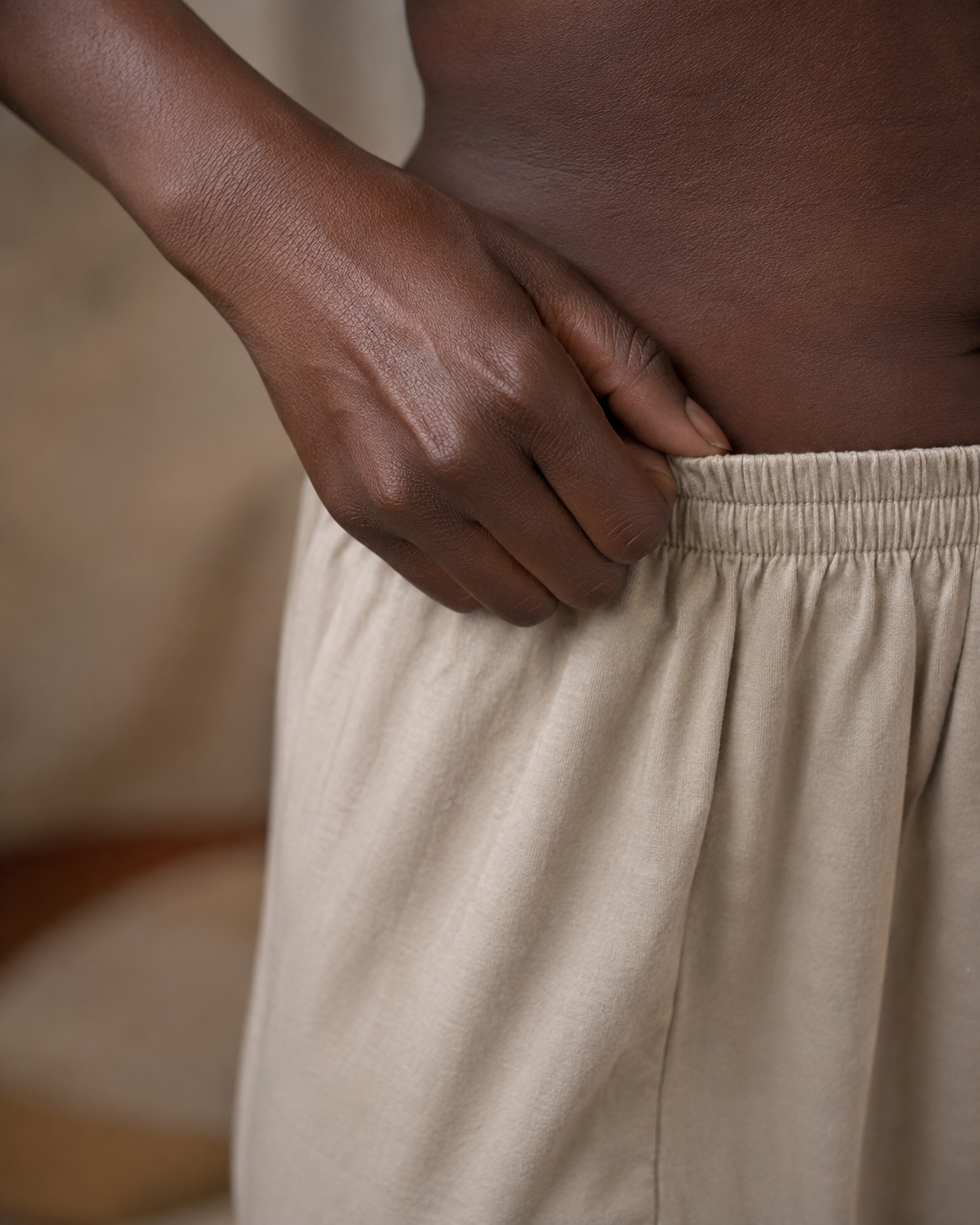
Think about the places that rub and stay damp — the inner thighs, under the arms, under the bra, the waistband, under the belly, the back of the neck. Those spots are doing two things to your skin at once, and on our skin both of them cost you. There is the raw, stinging rash that shows up now. And there is the dark mark that settles in later and stays long after the rash is gone. Most people only fight the first one. The second is usually the one that lasts.
Skin on skin, trapped with heat and moisture, inflames.
Where two surfaces of skin press and rub together — and sweat and body heat get trapped there with no air moving — the skin inflames. Doctors call it intertrigo, from the Latin for "to rub." It shows up as a red, raw, sometimes stinging or weeping patch in the fold. And because it stays warm and damp, that broken skin is an easy place for yeast to move in, which turns a simple rash into an itchy, spreading one. The trigger is the combination: friction, plus moisture, plus heat, plus no ventilation. Take away any one of them and it calms down.
Repeated friction darkens the skin. That is a real, named thing.
Here is the part that gets called dirt and blamed on the person, and it is neither. Skin that gets rubbed over and over — the same waistband line, the same inner-thigh contact, the same underarm — darkens. It is called frictional melanosis, and it is a documented pigmentary condition: brown pigmentation from repeated rubbing, and it shows up most, and lingers longest, on skin with more melanin. The darkened waistband, the shadowed inner thigh, the dark underarm — for a lot of us those are not hygiene problems. They are friction, written into the skin as pigment.
Both the rash and the rub leave pigment on our skin.
So on our skin this concern is really two pigment problems wearing one name. The intertrigo rash is inflammation, and inflammation leaves a mark — the same PIH we fight everywhere else. And the friction itself leaves its own mark, the frictional melanosis. Two roads to the same dark patch. Which is why sweat and friction belong on this site at all: for us, they are not just about comfort. They are another way our skin ends up holding pigment it did not ask for.
Dry it, reduce the rub, then fade.
You cannot fade a mark you keep re-making, so the friction and the moisture come first.
Keep it dry. After you wash, dry the folds completely — pat, do not rub. Through the day, the goal is to keep those areas from staying wet: breathable, moisture-wicking fabric that pulls sweat off the skin instead of cotton that holds it against you, and air where you can get it. This is the "sweat" half of the fix, and it does most of the work.
Reduce the rub. A barrier balm or anti-chafe stick over the high-friction spots gives the skin a slip layer so it is not dragging on itself or on a seam. For a raw, weeping patch, a zinc-oxide barrier cream both protects and calms. If the rash is spreading, itchy, and dotted with little satellite spots, that is likely yeast, and it needs an antifungal — a good moment to see someone.
Fade the mark. Once the skin is calm and the rubbing is handled, a friction mark is just hyperpigmentation, and it answers to the same tools as any dark mark on our skin: niacinamide, azelaic acid, a gentle retinoid, and patience. But only after the friction is under control — otherwise you are treating and re-marking the same spot at once.
The rash calms in days. The mark fades in months.
Two clocks again, like the acne marks. Get the area dry and the friction down, and the rash settles in days. The dark mark it — or years of rubbing — left behind will fade slowly, over months, the way pigment always does on our skin. That is not the routine failing. That is the timeline. Keep the friction down, keep the folds dry, keep the actives consistent, and the shadow lifts. Reign in your skin.
Reign in your skin.
The dark waistband, the shadowed inner thigh, the dark underarm are usually friction, not hygiene or dirt. Anywhere skin rubs and stays damp does two things at once: it inflames (a rash called intertrigo, which can pick up a yeast infection on top), and repeated rubbing lays down its own brown pigment (frictional melanosis). On darker skin both of those leave a dark mark, so it is really two pigment problems under one name. The fix runs in order, because you cannot fade a mark you keep re-making: dry the folds (pat, do not rub; wicking fabric, not cotton; airflow where you can), cut the friction (an anti-chafe barrier balm, or a zinc-oxide cream for a raw patch), and only then fade the mark with the usual actives, niacinamide, azelaic acid, a gentle retinoid, and time. The rash calms in days; the mark fades over months. A spreading, itchy rash with little dots around it is likely yeast and needs an antifungal.
Reign in your skin
Doctor Djeli is an educational resource, not medical advice.
Evaluate your products →Doctor Djeli is an educational resource, not medical advice.