Cracked heels are not a moisture problem. They are a thickness problem.
Hard, split, painful heels don't crack because you skipped lotion. They crack because a thick wall of built-up skin can't flex — so the fix is to soften and thin that layer, then repair the barrier underneath.
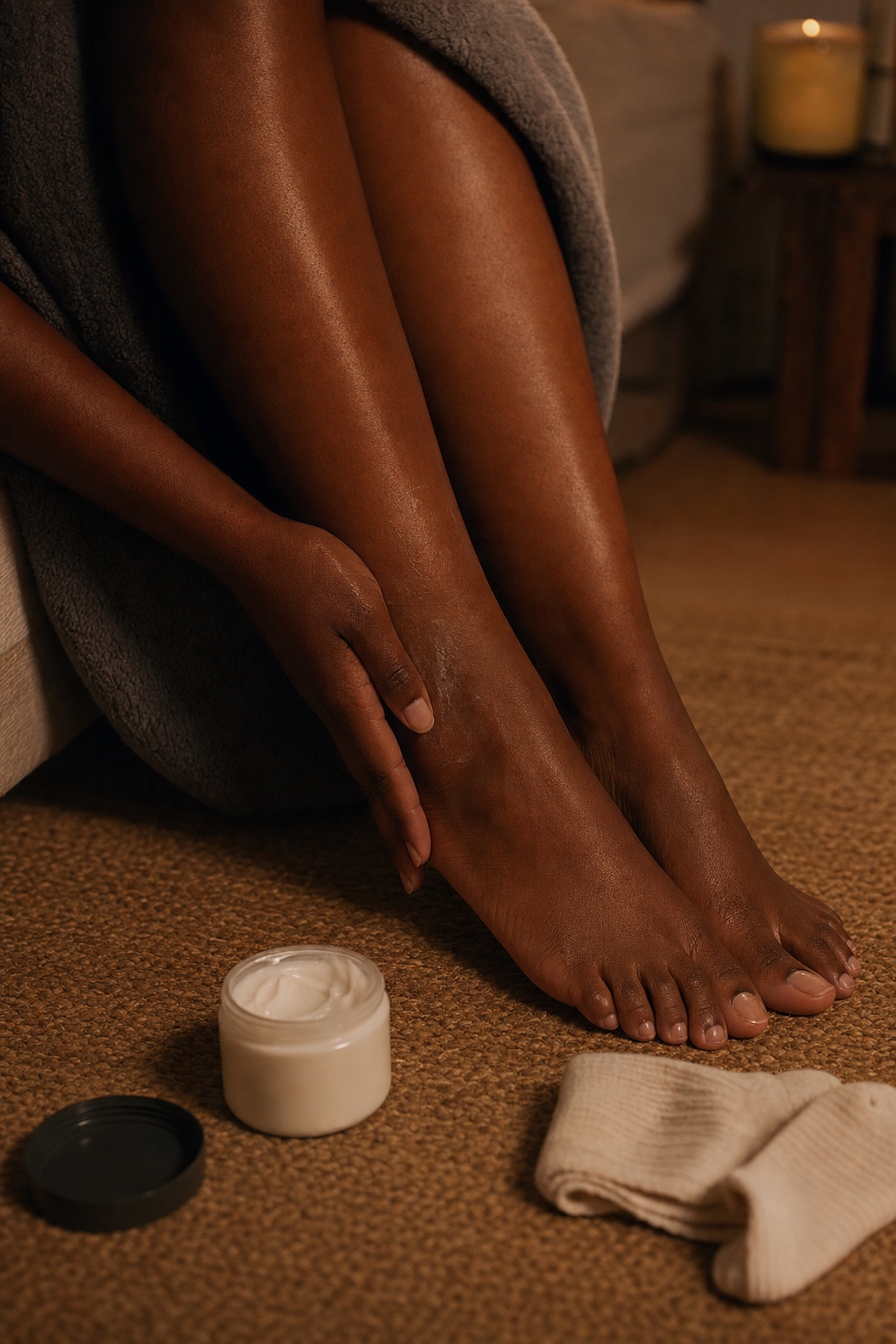
If the skin on your heels is hard, dry, and split — sometimes deep enough to catch on your socks or even bleed — you have probably been fighting it with lotion, thicker lotion, more often, and losing. The losing isn't your fault. It's that the whole approach is aimed at the wrong thing. Cracked heels are not, at their root, a dryness problem. They are a thickness problem. And once you see that, the fix stops being "moisturize more" and becomes "soften the wall, then repair underneath."
Heels crack because the skin is too thick to bend, not because it's too dry.
The skin on your heel cracks for a mechanical reason, not a hydration one. Over time, that skin thickens — it builds up a hard, protective layer of callus in response to pressure. And a thick, hard layer can't flex. Every time your foot bends and takes your weight, that rigid layer is asked to stretch, and instead of stretching it splits. That split is the crack. Sometimes it's shallow and cosmetic; sometimes it runs deep enough to reach raw, tender, or bleeding skin.
This is why lotion alone fails so reliably: you are applying moisturizer to the top of a thick callus, and it can't reach the living skin underneath. You're moisturizing a wall. No amount of cream on the surface fixes a problem that lives under a barrier the cream can't cross.
Pressure, friction, and open-backed shoes thicken the heel until it splits.
The thickening isn't random. It's your skin doing its job — protecting itself from repeated stress. Standing all day, walking on hard floors, carrying weight, and especially open-backed shoes that let the heel pad spread and slap with every step: all of it loads the heel with pressure and friction, and the skin answers by building callus. Dry air and low humidity make the thick skin more brittle, so it splits more easily, but the dryness is the aggravator, not the cause. The cause is the buildup.
That's why the people with the worst heel cracks are often on their feet all day in the wrong shoes — and why changing to a closed-back, cushioned shoe is a real part of the fix, not a side note.
A keratolytic dissolves the wall — and gentle works as well as harsh.
Because the problem is a thick layer that can't flex, the fix is an ingredient that dissolves that layer — a keratolytic. Urea is the classic one, and the concentration is the whole story: around 10% is a maintenance-and-hydration dose, while 20% to 40% is the keratolytic range that actually breaks down thick, fissured heel skin. Salicylic acid and lactic acid work similarly.
But here's the finding worth knowing, especially if strong keratolytics sting you: according to PubMed, in a double-blind trial a fragrance-free barrier-repair cream with hyaluronic acid healed cracked heels as effectively as urea 40% — and did it without the burning and irritation that salicylic-acid formulas can cause on already-split skin. So you genuinely have two good routes: the high-strength keratolytic, or the gentle barrier-repair cream. Gentle is not the weaker choice here.
Cream, socks, overnight — the repair happens while you sleep.
Whichever softener you choose, the application is the same and the timing is the trick: apply it at night, pull on a pair of cotton socks over it, and let it work while you sleep. The socks hold the product against the heel and keep it from wiping off on the sheets, so the skin gets hours of uninterrupted contact. Do it nightly until the heel is soft and flexible again, then drop back to a few nights a week to maintain it.
Filing and shaving a cracked heel makes a bigger wound, not smoother skin.
There's a strong temptation to just take the hardness off — a metal foot file, a callus shaver, one of those cheese-grater tools. On an already-cracked heel, put it down. Aggressively filing or shaving split skin gives you a bigger wound and, often, a thicker, angrier callus when it grows back, because the skin thickens harder in response to the trauma. Let the keratolytic thin the layer chemically and gently over a week or two. Gentle, repeated softening beats one aggressive scrape every time.
Some foot cracking is fungal, diabetic, or a barrier disease — and that changes everything.
Most cracked heels are a thickness-and-barrier story with a thickness-and-barrier fix. But some are not, and a few of those are genuinely serious. If you have diabetes, foot care is a different category entirely — reduced sensation and slower healing mean a crack can turn into a real wound quickly, and any persistent cracking or a heel that won't heal needs a doctor or podiatrist, not a home routine.
Recognizing when a heel is more than a dry heel is not being dramatic. On some feet it's the difference between a cosmetic fix and preventing a real problem.
And through all of it, the part that's ours: on deep skin, an inflamed crack can heal into a dark mark that lingers long after it closes. So softening and repairing the heel isn't only about smooth feet — it's how you keep the cracking from leaving a shadow behind.
Reign in your skin.
The short version: cracked heels are a thickness problem, not a dryness problem. The skin builds up a thick, hard layer that can't flex, so it splits — and lotion on top of that layer never reaches the skin underneath.
The fix, in order: soften the thick layer with a keratolytic — urea, usually 20 to 40% for thick, cracked heels; apply at night, cotton socks over it, and let it work overnight; wear closed-back, cushioned shoes; put the foot file down.
See a doctor if the cracks won't heal, weep, or spread — and treat it as urgent if you have diabetes, where a heel crack can become a serious wound fast.
On deep skin, an inflamed crack can heal into a dark mark, so repairing the heel protects your tone, not just your comfort.
Reign in your skin
Doctor Djeli is an educational resource, not medical advice.
Evaluate your products →Doctor Djeli is an educational resource, not medical advice.