Ashiness is not a flaw. It is a climate response.
If your skin got drier — or started breaking out — after your environment shifted, suspect the air before you blame your skin. The barrier runs on the weather.
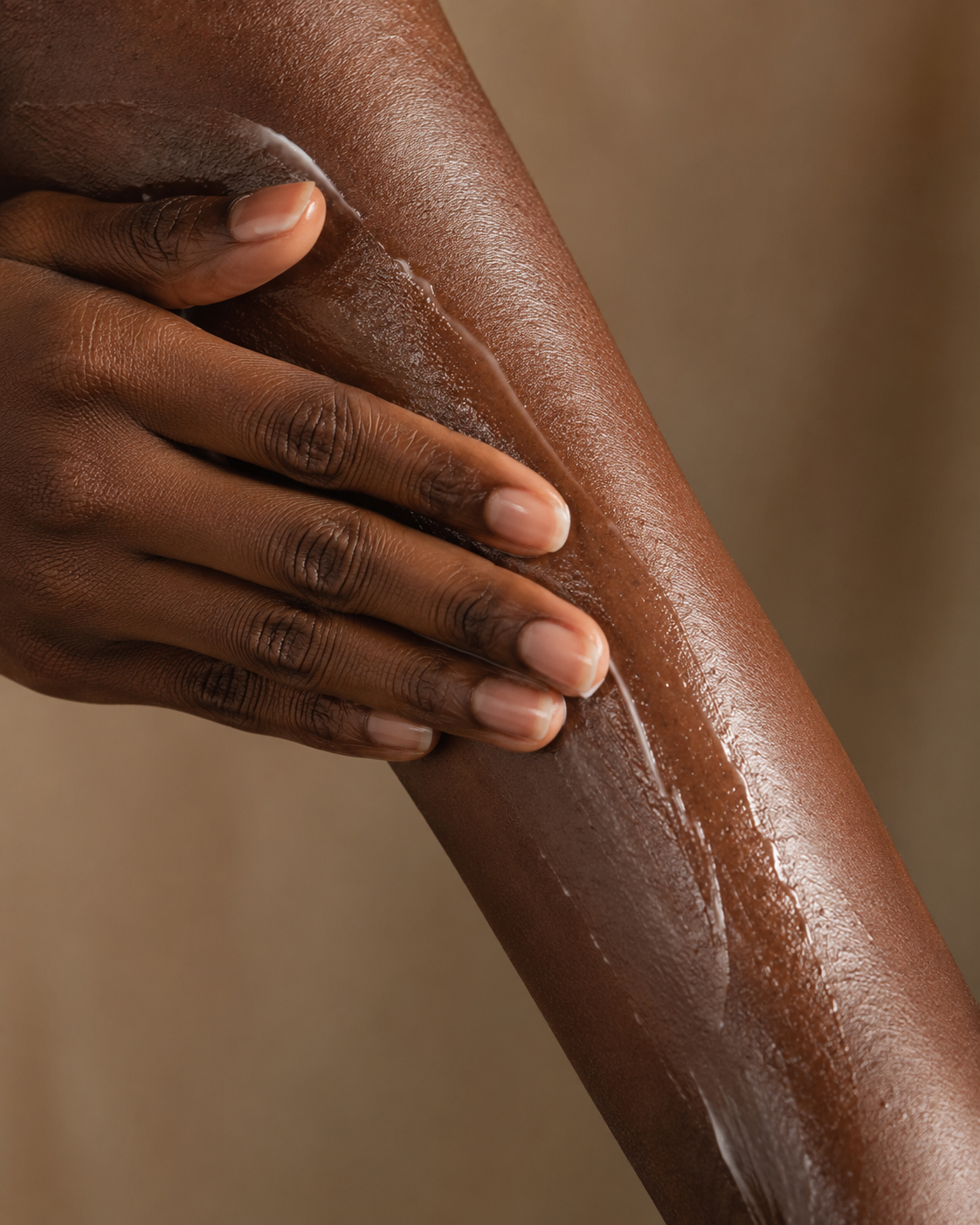
Start here if two things are true at once: your skin got drier, or started breaking out more, and something in your environment changed. Most often that is a move — but it does not have to be. Skin is a living barrier, and it responds to the climate it sits in, so when the climate changes, the skin changes with it. That is not a flaw you developed. It is your skin doing exactly what skin does.
Drier skin, or more breakouts, after your environment shifted.
If the skin changed around the time the ZIP code did, the odds are it is not your skin that went wrong. It is the air. And here is the part people miss: you do not have to move for the climate to change on you. If the place you live has been getting hotter, or drier, year over year — and many places are — your skin can shift while you stand still. The rule is the same either way. Match your routine to the climate you are actually in now, and re-match it as that climate changes.
Dryness you can see — and lotion on top doesn't fix it.
Ashiness is dryness that shows. On our skin it reads sharper — the grey cast, the tight feeling, the lotion that soaks in and an hour later the skin looks thirsty again. Most of us were taught it means we skipped a step, and the answer is more lotion. That is half right. Lotion helps for an hour — but if the air around you is pulling water out of your skin faster than a quick lotion can hold it, you will lose that fight every afternoon. The fix is not more lotion. It is understanding what is pulling the water out, and sealing against it.
Humidity and temperature decide how much water your skin can keep.
How dry your skin gets is driven, more than by almost anything else, by the humidity and temperature around it. When the air is dry and cold, it pulls water up and out through the skin faster — the skin loses water to the air, dries, roughens, flakes. When the air is warm and humid, the skin holds its water easily and barely needs help. This is not a small effect. Researchers tracking dry-skin complaints across the whole country found that colder, drier states drive far more dryness than warm, humid ones. The same skin, in different air, behaves like different skin. So the routine that worked in one climate can fail completely in another — and it is the climate that changed, not you.
A diaspora is a people moved from their climate.
For us, this lands with particular weight, and it is worth saying plainly. So much of what gets sold to us as a flaw in our skin — it's ashy, it's difficult, it needs fixing — is really our skin sitting in a climate different from the one our routines were built for. A diaspora is, by definition, a people moved from where they were. The grandmother's routine that worked in the islands, the way your skin behaved back home or down South, the products that used to be enough — those were tuned to that air. Move the skin to Colorado, to a Midwest winter, to a heated apartment up North, and the same skin needs something different. That is not your skin failing. That is your skin in new air, asking for a routine that matches where it actually lives now.
A dried-out barrier is an open door to the dark mark.
When the barrier dries and cracks, it stops keeping irritants out — and irritants inflame the skin, and on our skin inflammation leaves a mark. So a dry, compromised barrier is not just uncomfortable; it is an open door to the exact hyperpigmentation you are working against everywhere else. Matching your routine to your climate is not vanity. It is protecting against the mark.
Stop trying to add water. Start sealing it in.
If you are in a dry, cold climate — Colorado, the Mountain West, a Midwest or Northeast winter — the instinct is to pile on more moisturizer. Do one better: add a real seal on top of it. The order matters. Moisturize first, on damp skin straight out of the shower, then lock it down with an occlusive layer — a butter or a heavier oil that sits on top and stops the water from escaping into the dry air. This is exactly where the Lipid Library earns its keep. A layer of jojoba oil or shea butter smoothed over your azelaic acid body lotion, right out of the shower, will do more for cracked, ashy limbs than a cabinet full of the things people usually try. You are not adding more water. You are keeping the water you have from evaporating into thirsty air.
Go lighter, and let a humectant do the work.
In a hot, humid climate your skin holds water easily and makes more of its own sweat and oil — so a heavy occlusive on top can feel like too much and leave you congested. Go lighter. Reach for a hydrating serum instead of a heavy cream, and look for urea on the label. Urea is a humectant — it pulls water into the skin — but it also gently loosens the dead surface cells, which keeps that extra sweat and oil from settling into congested pores. A urea-based body serum does this well in humid air. And if you want one bottle that behaves across almost any climate, a urea-and-ceramide lotion — CeraVe's 5% urea lotion is a good example — gives real moisture without heavy occlusive weight: the urea pulls water in, the ceramides and shea hold it, and the texture stays light enough for humid air while still doing the job in dry. It also layers cleanly over an active — smooth it on after a retinol body product, or put it down first and seal it with a body oil when the air is dry.
Match the routine to the climate, and it turns around fast.
A barrier is not a slow project like fading a mark — once you match the routine to the air you are actually living in, it turns around in about two weeks. The tightness eases first, then the ashiness lifts as the skin holds its water again. You are not fixing broken skin. You are giving the skin what this climate takes from it. Re-match it when you move — or when the climate moves on you. Do that, and the barrier holds: the quiet foundation under everything, less irritation, fewer marks, and skin that stays comfortable instead of going thirsty an hour after the lotion. Reign in your skin.
Reign in your skin.
If your skin got drier, or started breaking out more, after your environment changed, suspect the air before you blame your skin. A move is the usual trigger, but a climate slowly getting hotter or drier around you does the same thing. Skin is a living barrier, and how much water it holds is driven more by the humidity and temperature around it than by almost anything in the bottle: dry, cold air pulls water out fast (that is the ashiness), and humid air lets skin keep it. For diaspora communities this lands with weight, because the routine from back home was tuned to a different climate than the one the skin lives in now. In dry or cold air, do not just add more lotion; moisturize on damp skin, then seal it with an occlusive on top (jojoba or shea over your body lotion). In hot or humid air, go lighter and let a humectant like urea do the work. A urea-and-ceramide lotion (such as CeraVe's 5% urea) works across most climates. And a dried-out barrier is also a dark-mark risk on darker skin, since the irritants it lets in cause the inflammation that leaves pigment. Match the routine to the climate and it turns around in about two weeks.
Reign in your skin
Doctor Djeli is an educational resource, not medical advice.
Evaluate your products →Doctor Djeli is an educational resource, not medical advice.