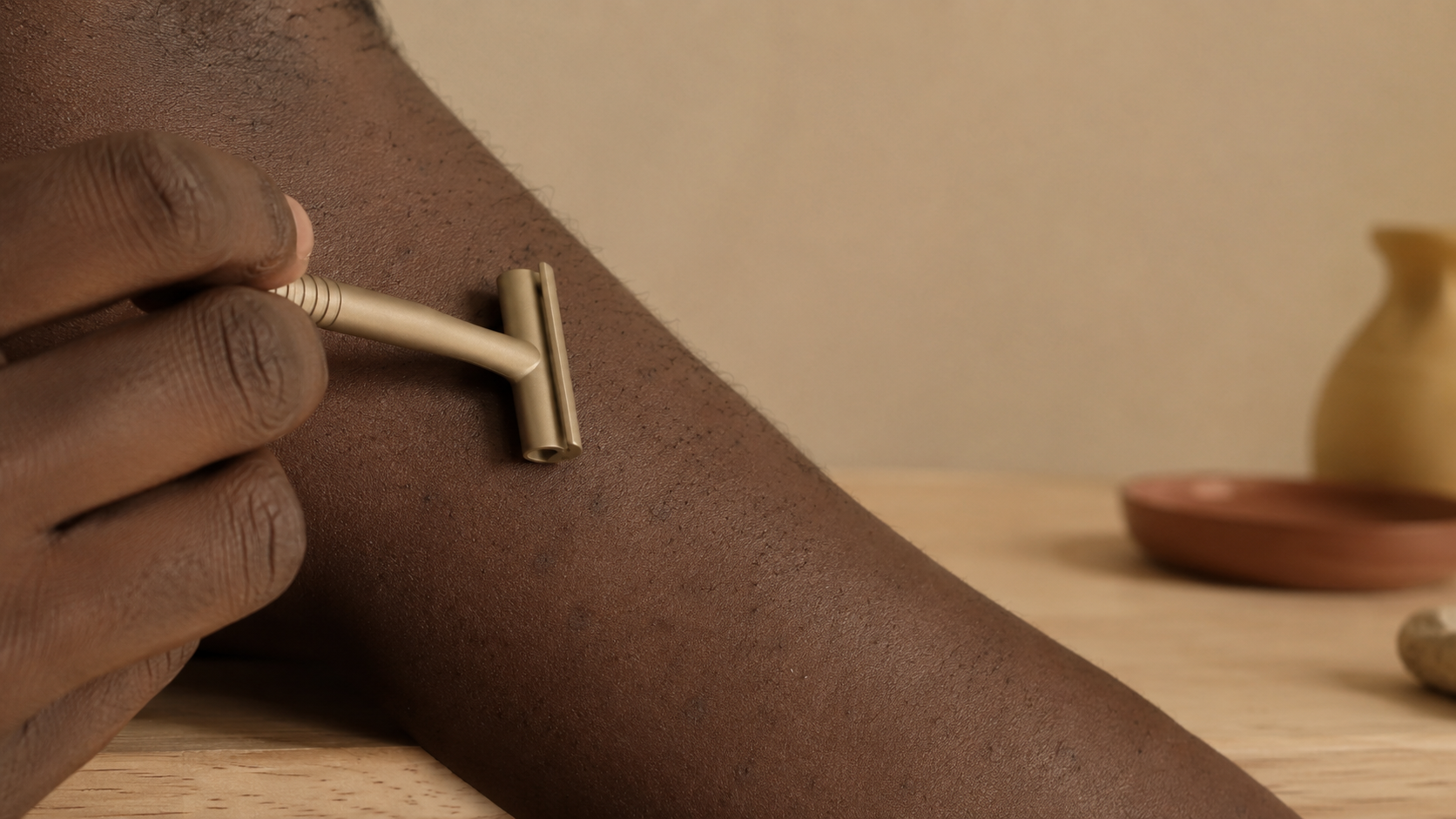
You don't have a shaving problem. You have a hair problem.
The clinical name is pseudofolliculitis barbae.
The “pseudo” is the whole point. This is not an infection, and there is no bacteria driving it. It is your skin’s inflammatory response to your own hair re-entering it after it is cut. The body treats a buried hair tip as a foreign object and surrounds it. That response is the bump.
And it is not a man’s problem. Anyone with coarse, curly hair who removes it gets this — shaving the face, the legs, the underarms, the bikini line, the nape. The beard line is only the most visible place. The mechanism is the same everywhere the hair is.
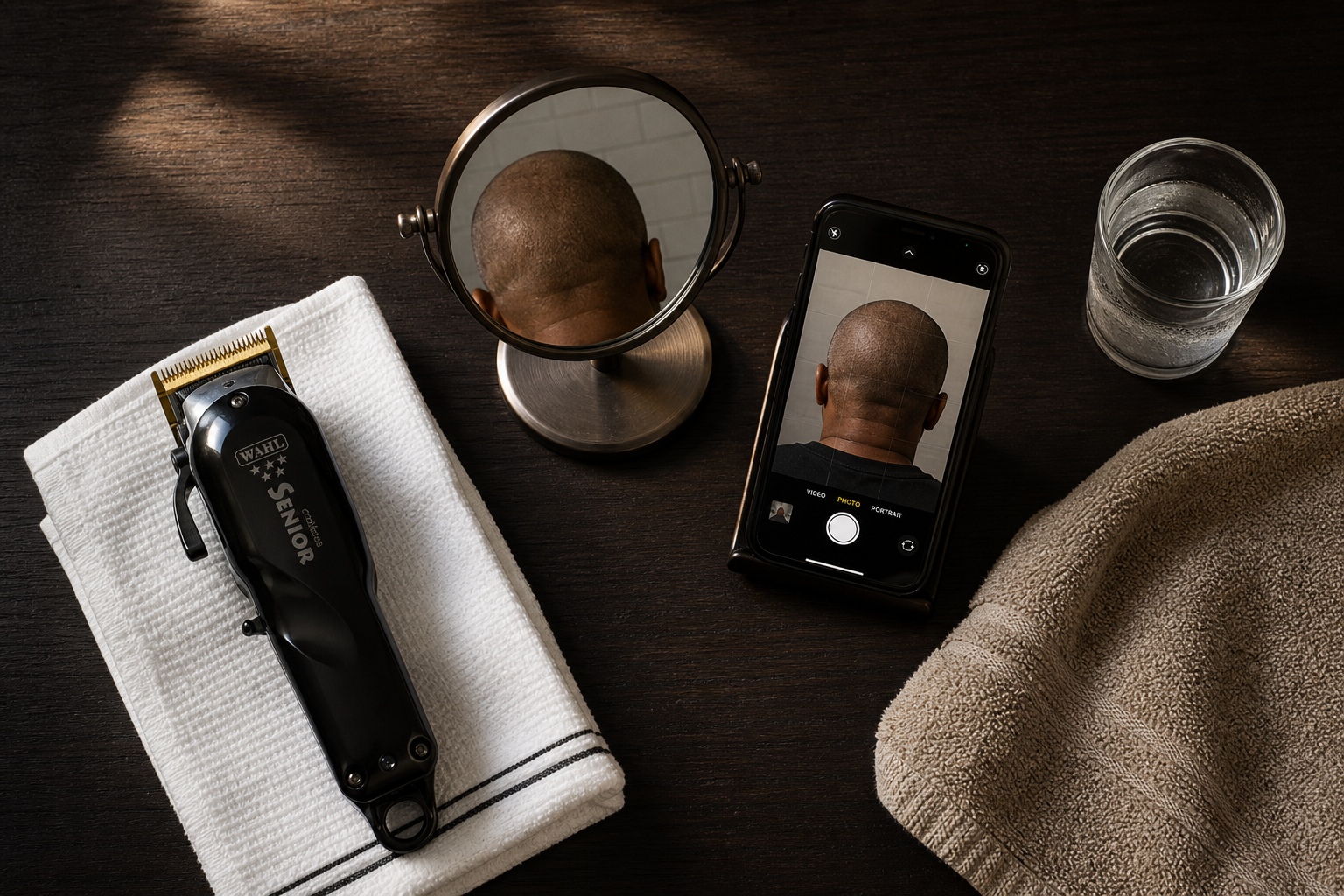
Years of the same routine — the close pass, the aftershave, the bumps that never fully clear. Let me show you what is actually happening.
Hair shape decides what happens after the cut.
Coarse, tightly coiled hair has an elliptical cross-section. A close cut leaves a sharp, angled tip — and because the hair already curves, that tip turns back toward the skin instead of growing straight out. Straight hair exits, lies flat, and grows forward. Coarse curly hair exits, curves, and comes back.
Technique can reduce the severity. It cannot override the geometry.
That is the structural fact the shaving aisle does not sell you. It is also why the same person can do everything “right” and still break out — the fix is not trying harder, it is changing the conditions.
The cut hair turns back into the skin. Your body fights the buried tip. That’s the bump.
The hair re-enters one of two ways.
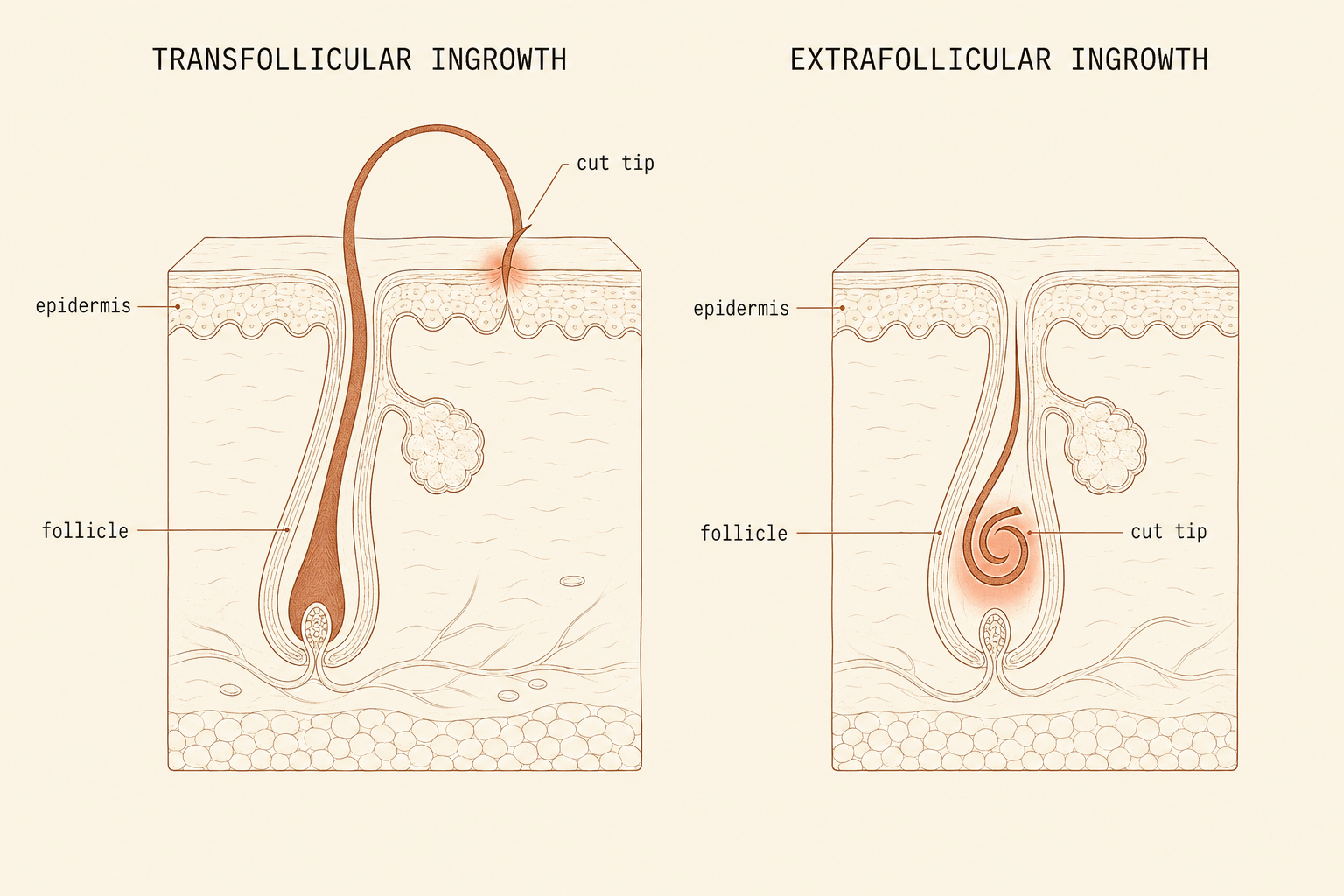
Transfollicular — the cut hair curves back and pierces the skin from outside the follicle. Extrafollicular — it never exits, coiling and growing inside the follicle below the surface. On Fitzpatrick IV–VI skin both happen, sometimes in the same follicle. Either way, the immune system surrounds the trapped tip, and the inflammation is the bump.
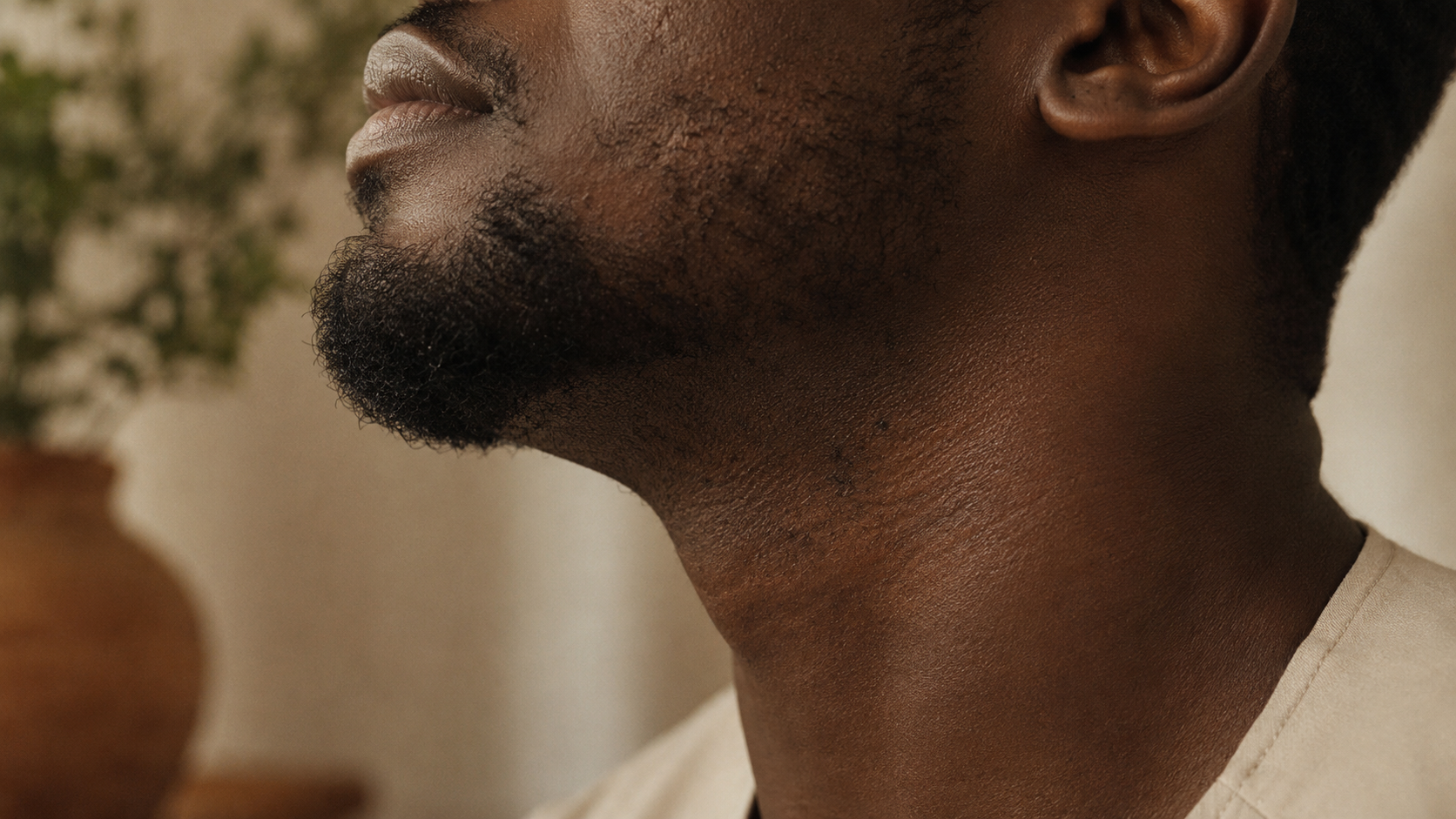
The bump heals. The dark mark it leaves can stay for months — sometimes years.
The bump is stage one. The mark is what you came here about.
On deep skin, every inflamed bump can leave post-inflammatory hyperpigmentation — a dark mark that outlives the bump by months. Shave over the same skin before it clears and the marks deepen; at the extreme, repeated trauma along the neckline can become raised, keloidal scarring. The marks, not the bumps, are usually the real complaint — and they are the reason to interrupt the cycle now rather than wait it out.
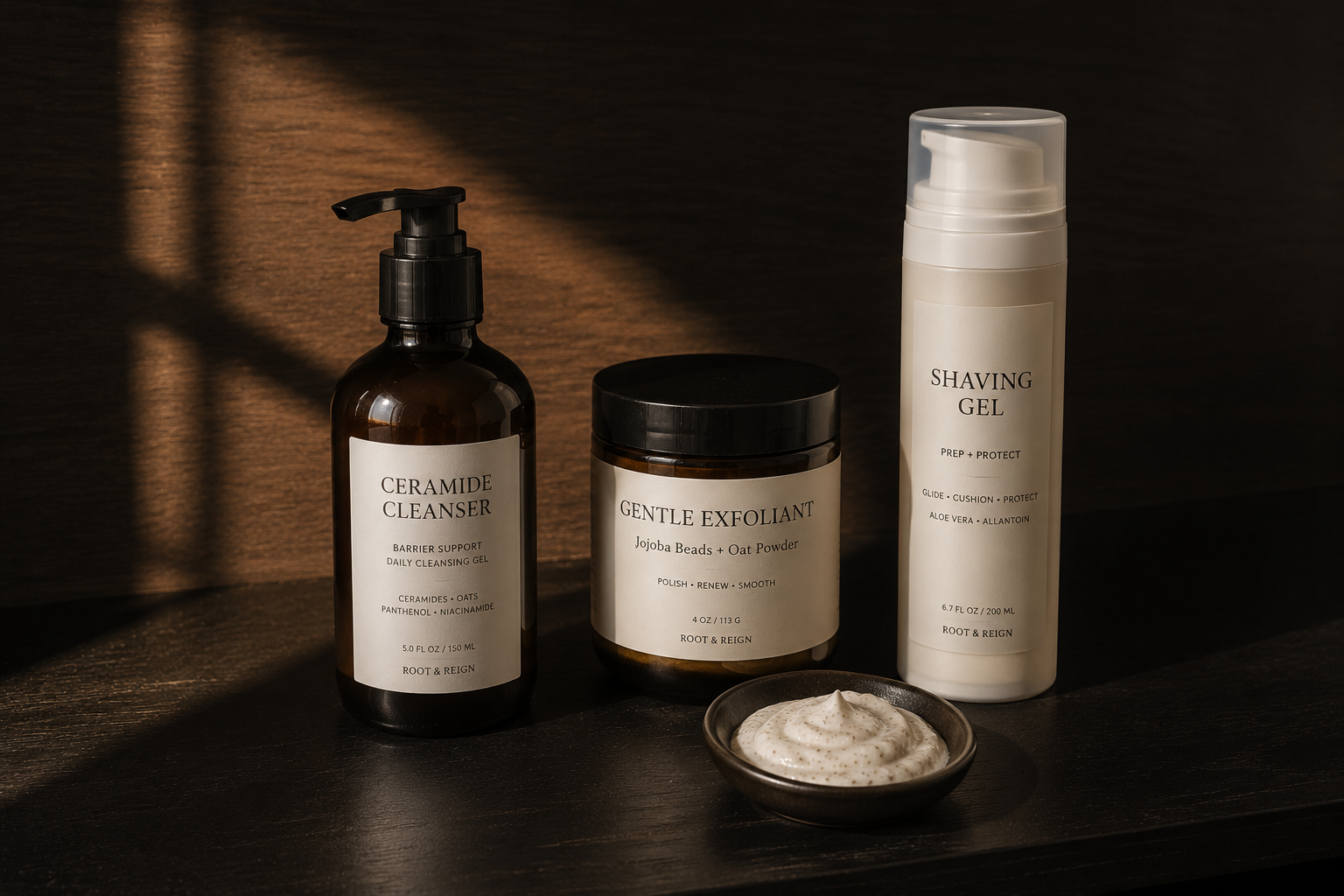
Interrupt the re-entry, then treat the marks. Three steps, in order.
- Prep
Shave with the grain, single blade
A single-blade or foil razor leaves a longer, rounder tip. Multi-blade cartridges cut below the surface — exactly where the hair curls back.
- Treat
Azelaic acid + niacinamide
Azelaic fades the dark marks and calms inflammation; niacinamide blocks the pigment transfer. The pair does the work.
- Seal
Barrier cream
Keep the barrier whole so the next shave starts from calm skin, not compromised skin.
Give it one follicle cycle before you judge it.
A single follicle cycle is about eight weeks — the minimum before any protocol has had a fair chance. When the bumps are chronic, the durable fix acts at the follicle: laser hair reduction, but only Nd:YAG 1064nm, the one wavelength validated for Fitzpatrick V–VI. Other wavelengths risk burns and paradoxical darkening on deep skin. That caveat is not a preference — it is the line between help and harm.
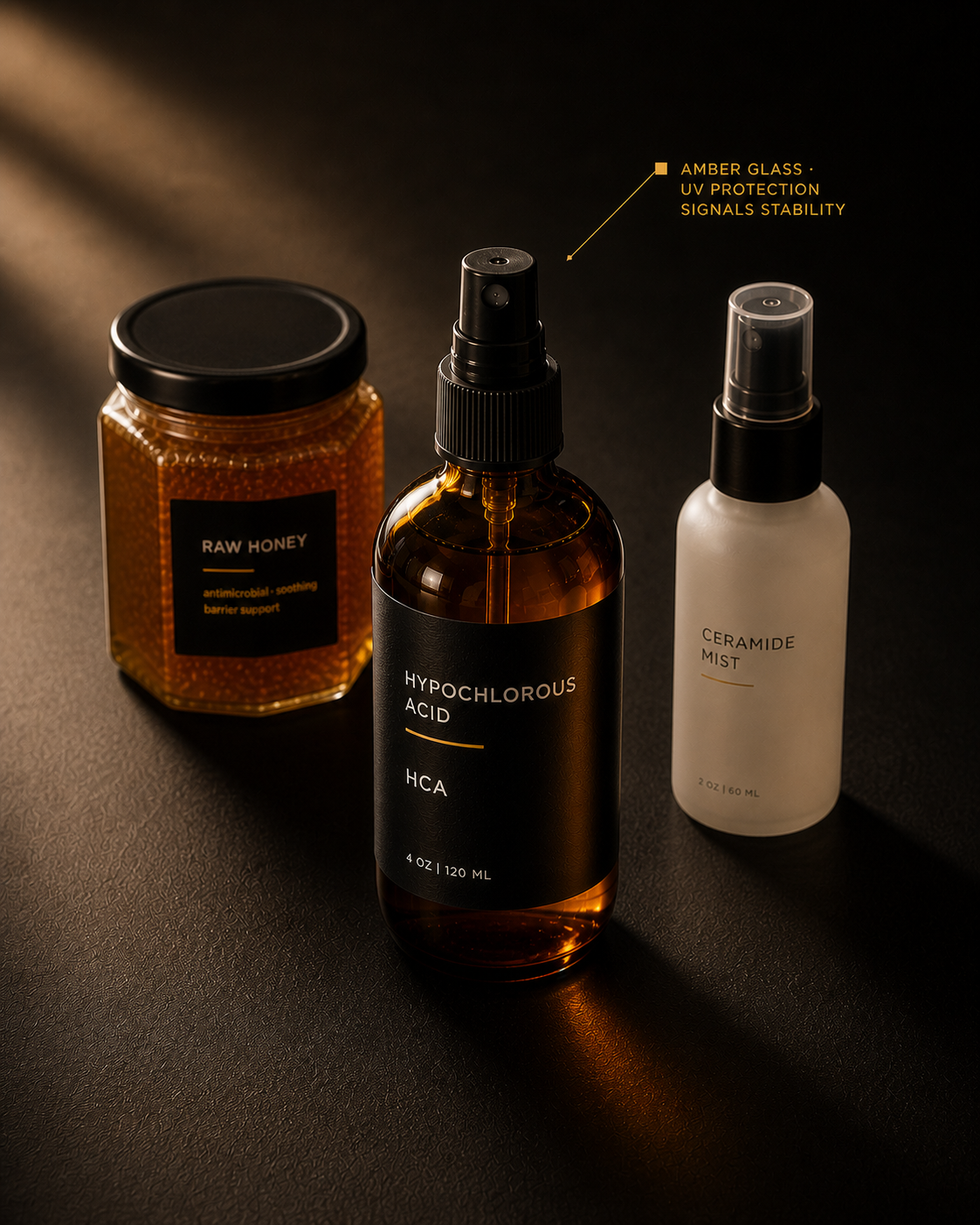
If you change one thing today, change the blade and add the azelaic.
Get the full routine → Not sure what you’re using? Evaluate it →
Reign in your skin
Doctor Djeli is an AI, trained on evidence-based dermatology and lived expertise in melanated skin — built by a real person who navigated this firsthand. Educational resource, not medical advice.