
That squeaky-clean feeling is not clean.
The cleanser that gave you that feeling this morning may be causing the dark marks you are treating tonight.
That feeling — face just washed, skin tight, slightly squeaky to the touch — has been marketed as the proof your cleanser worked. It is not. It is the sound of your skin barrier being stripped. For Fitzpatrick IV–VI skin, the consequences are not subtle. Skin barrier damage triggers inflammation. Inflammation triggers post-inflammatory hyperpigmentation. The cleanser that gave you that squeaky-clean feeling this morning may be the upstream cause of the dark marks you have been treating with serums all evening.
There is real chemistry behind why this happens, why it gets worse with hard water, and why it costs melanated skin more than it costs other skin types. Once you understand the mechanism, the protocol changes.

The acid mantle is not optional. It is part of how the skin functions. Alkaline cleansers strip it every time they touch your face.
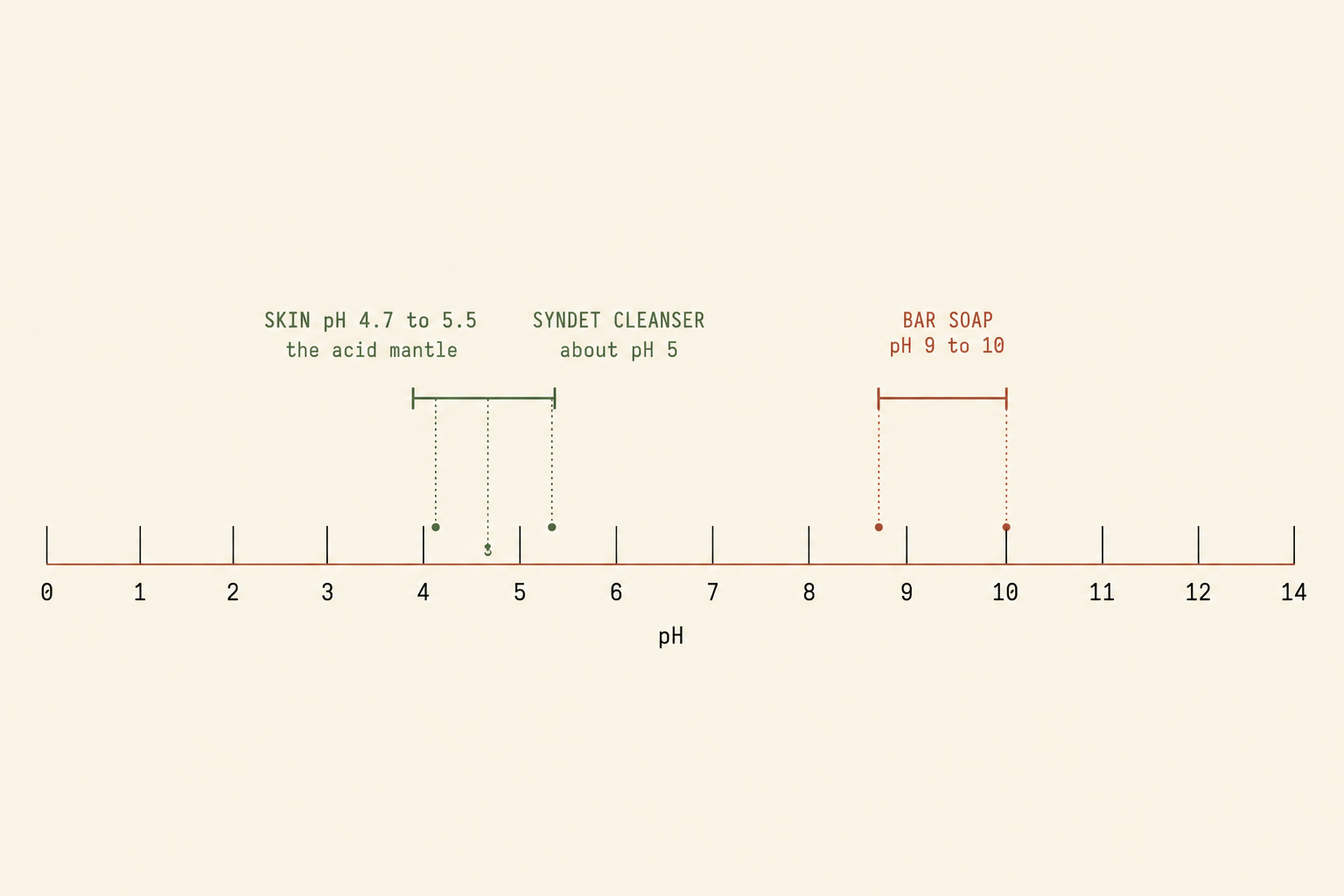
Healthy skin sits at pH 4.7 to 5.5. The acid mantle protects everything downstream.
The “acid mantle” is a coating of sebum, sweat, lipids, and microorganisms that maintains a slightly acidic surface environment. It keeps the lipid matrix between your skin cells intact — the ceramides and fatty acids that hold the stratum corneum together are stable at acidic pH and degrade at alkaline pH. It controls which microorganisms grow on the skin. It moderates enzyme activity in the upper skin layers. Strip the acidity and you strip the cement between the bricks of your skin barrier.
The cleanser that gave you that squeaky-clean feeling this morning may be the upstream cause of the dark marks you have been treating with serums all evening.
Traditional bar soap and many high-foaming cleansers are formulated at pH 9 to 10. When that hits skin sitting at pH 5, the spread is more than four orders of magnitude. The squeaky feeling you get after using these cleansers is what the skin’s surface lipids feel like when they have been stripped away. Properly cleansed skin should feel comfortable, slightly soft — neither tight nor squeaky.
Strip the acid mantle. Compromise the barrier. Trigger inflammation. On this skin, inflammation leaves a mark.
Minerals in hard water bind to surfactants and stay on your skin for hours after rinsing.
Water hardness — elevated calcium and magnesium ions — dramatically increases the barrier damage caused by surfactant cleansers. Work by Danby and colleagues at the University of Sheffield (2018) established the mechanism directly: calcium and magnesium ions in hard water react with surfactants in soap and bind to them, forming insoluble compounds that precipitate onto the skin. The surfactant residue is not rinsed off. It stays in contact with the skin for hours after cleansing, continuing to strip lipids and disrupt the barrier long after you have left the sink.
The same cleanser, used in hard water, produces meaningfully worse barrier damage than the same cleanser in soft water. For most of the American West, upper Midwest, and much of Europe, this is not a hypothetical — it is the water coming out of the tap.

Every barrier-damage event on this skin has a name. Post-inflammatory hyperpigmentation. Fix the cleanser first.
The same cleanser that causes irritation on Fitzpatrick I skin causes a dark mark on yours.
Fitzpatrick IV–VI skin responds to barrier damage and inflammation with melanin production. A barrier-damage event on Fitzpatrick I skin produces irritation and resolves with no lasting visible change. The same event on Fitzpatrick V–VI skin can produce a dark mark that takes months to fade. The biology that protects against UV damage on the front end becomes a liability on the recovery end — your skin pays for every inflammatory event by depositing more pigment.
This means the cleanser and water variables are not minor cosmetic concerns. They are upstream determinants of how much PIH your skin is producing. The most potent vitamin C serum, the best-formulated tranexamic acid, the most evidence-backed niacinamide — all of them produce less benefit on skin that is being barrier-stripped twice a day before they get applied.
The cleanser is upstream of every active ingredient you use. Four changes, in order of impact.
- Replace
Swap alkaline for pH-balanced
Look for “pH 5,” “skin-pH-matched,” or “syndet” on the label. Pump or liquid cleansers in this category are almost universally pH-appropriate. Traditional bar soaps usually are not.
- Filter
Address the water if you are in a hard water area
Shower-head filters with KDF or calcium-binding resins reduce mineral exposure significantly. A second rinse with bottled or distilled water on the face is another option.
- Technique
Hands only — no washcloths or exfoliating tools
Mechanical action compounds the barrier damage surfactants are already producing. Hands and warm water are enough for routine cleansing.
- Transition
Two to three weeks for the acid mantle to rebuild
After switching from alkaline cleansers, the skin may feel temporarily different as it rebalances. This passes. The new baseline is healthier than the old one.
Fix the cleanser. The actives will work better.
The cleansing step is upstream of every other product you use. A barrier-damaged baseline reduces the efficacy of every active ingredient that follows. Fix the cleanser and fix the water if you can. Everything downstream — the vitamin C, the tranexamic acid, the niacinamide, the azelaic acid — works better on a barrier that is not being stripped twice a day before they are applied.
Ready to evaluate your full routine, starting with the cleanser? The ROOT & REIGN evaluator reads your products against what the research actually says — calibrated for skin built with more melanin, because that is most of the world, and it is time the tools reflected that.
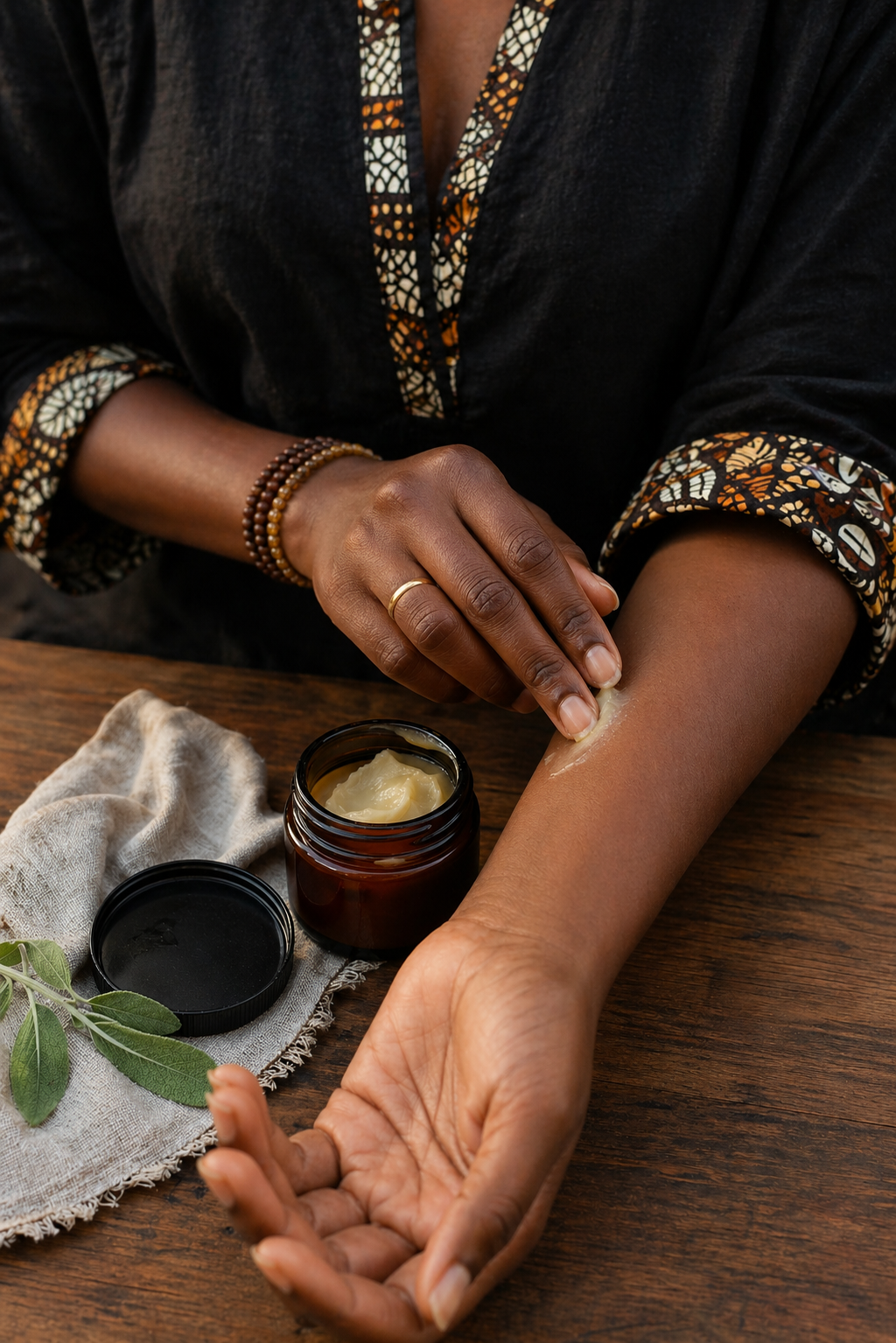
Fix the cleanser. Fix the water if you can. The actives will work better.
Evaluate Your Products → Not sure what you’re using? Evaluate it →
Reign in your skin
Doctor Djeli is an AI, trained on evidence-based dermatology and lived expertise in melanated skin — built by a real person who navigated this firsthand. Educational resource, not medical advice.